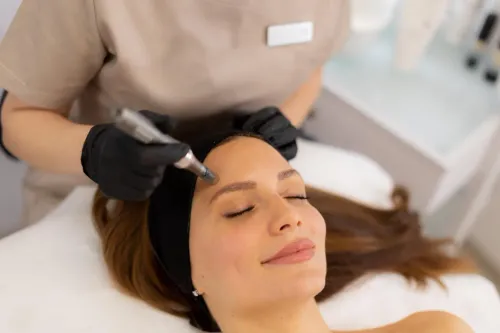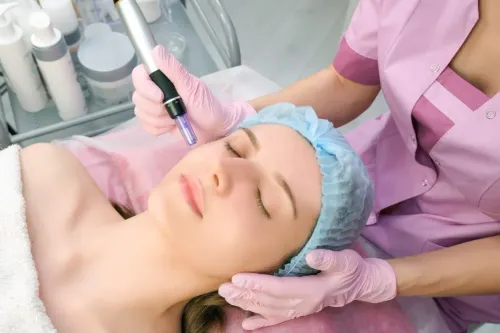
Not everyone noticing early facial ageing wants surgery. Mild skin laxity, reduced facial definition, fine lines, volume changes, and declining skin quality can lead people to explore a non-surgical facelift. The term, however, describes a treatment strategy rather than one specific procedure.
For individuals in Bandra, Maharashtra, evaluating non-surgical facial rejuvenation begins with identifying which aspects of ageing are actually creating the concern.
What a Non-Surgical Facelift Can Mean
Different clinics may use the phrase for different combinations of aesthetic procedures.
Depending on the patient, treatment may focus on:
- Collagen stimulation
- Facial volume
- Skin hydration
- Fine lines
- Skin quality
- Mild laxity
- Facial contour
- Uneven texture
This explains why two patients requesting the same treatment may receive completely different recommendations.
Mild Ageing Changes May Respond Differently
Non-surgical procedures generally have different capabilities from surgical lifting.
A patient with mild loss of firmness may be a more appropriate candidate for minimally invasive rejuvenation than someone with substantial tissue laxity who expects a dramatic lifting effect.
Understanding that distinction prevents unrealistic expectations.
A consultation with Dr. Purva can identify whether the main issue is volume loss, skin laxity, pigmentation, textural ageing, dehydration, or several concerns occurring together.
Choosing Treatment Based on Facial Anatomy
Facial ageing does not occur uniformly.
The cheeks may lose volume while the lower face develops less definition. Fine lines can coexist with good facial volume, while another person may have relatively smooth skin but noticeable structural changes.
A well-planned non-surgical facelift therefore considers facial proportions rather than treating individual areas without reference to the whole face.
Questions Worth Asking Before Proceeding
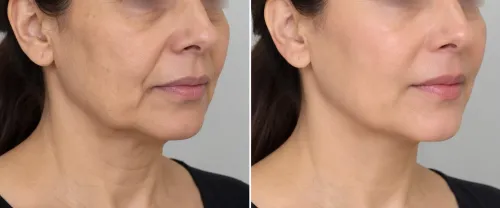
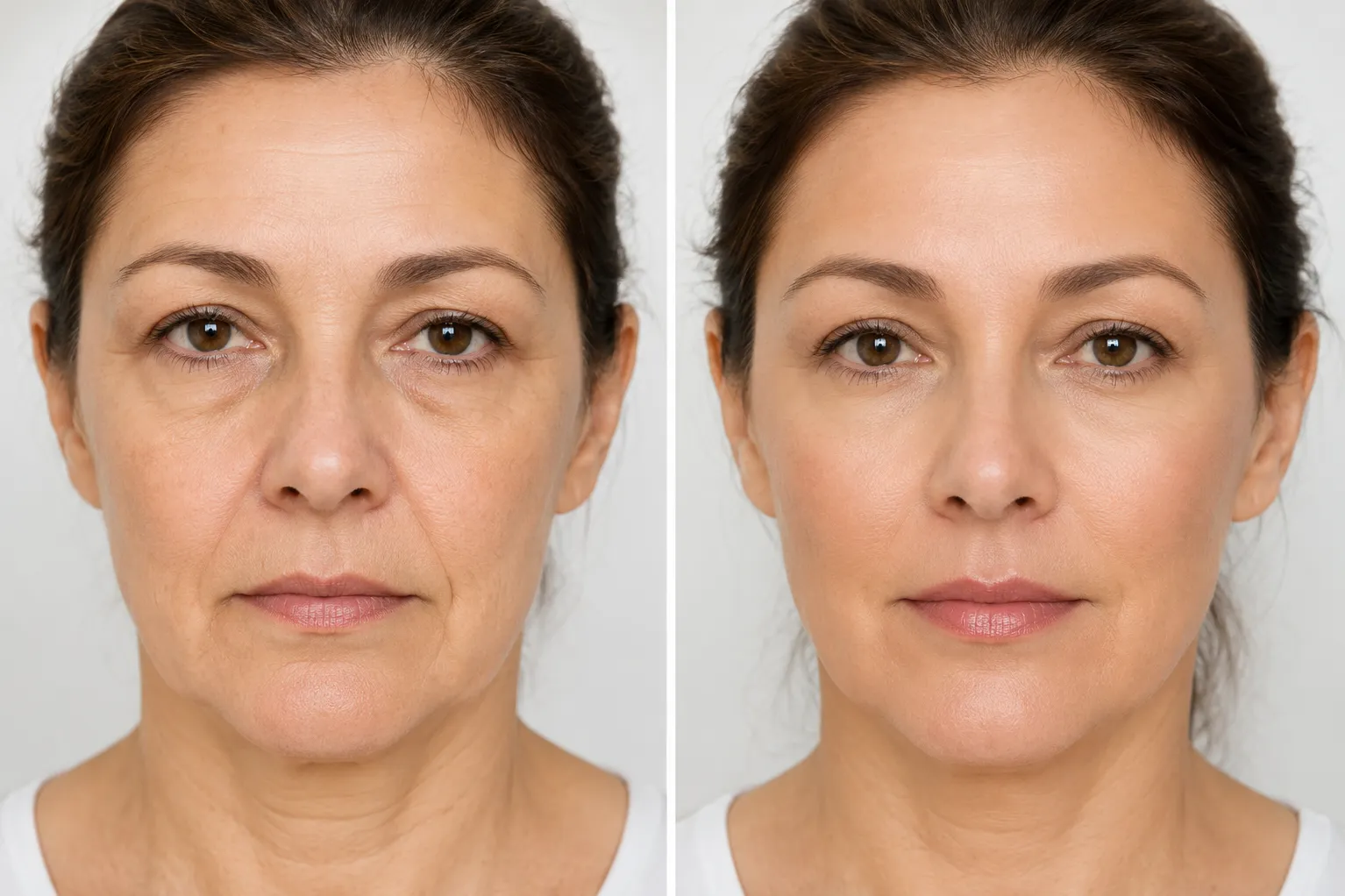
Patients evaluating treatment should ask practical questions rather than concentrating only on before-and-after photographs.
Useful questions include:
- Which ageing changes are being treated?
- What procedure is being recommended?
- Why is it suitable for my facial anatomy?
- How long might the effect reasonably last?
- What downtime is expected?
- What complications are possible?
- Will maintenance treatment be needed?
- Are there alternatives?
Clear answers make it easier to decide whether the expected improvement justifies the procedure.
Natural Results Require Restraint
Aesthetic treatment does not necessarily need to create an obvious transformation.
For many patients, the objective is to appear refreshed while maintaining recognisable facial characteristics.
This requires attention to proportion, treatment amount, product selection where applicable, and the patient’s existing anatomy.
Trying to correct every age-related change in a single session may not always be appropriate.
Knowing When Non-Surgical Treatment Is Not Enough
One of the most important parts of an aesthetic consultation is recognising limitations.
Some concerns may respond modestly to minimally invasive procedures, while significant structural laxity may require discussion of other options.
Nucleus Eye And Skin Clinic can assess facial ageing from a dermatological and aesthetic perspective before recommending an approach.
A non-surgical facelift can be valuable for appropriately selected patients, particularly when the desired outcome is subtle rejuvenation rather than surgical-level lifting. The treatment name matters less than understanding the specific concern, choosing suitable techniques, and establishing realistic expectations before treatment begins.
Keywords