Dullness can come from dehydration and surface buildup, but uneven brown, red, or gray colour can also signal acne marks, melasma, sun damage, irritation, or a skin condition that needs diagnosis. You will learn how to identify the likely cause, compare home care with procedures, prepare safely, and protect results from recurring pigment.
Key takeaways
- Treat dehydration, surface scale, acne, redness, and pigment differently.
- Use daily sunscreen before adding stronger brightening ingredients.
- Choose procedures based on the cause, skin type, and pigmentation pattern.
- Expect gradual improvement and continue maintenance to reduce pigment recurrence.
What is causing your dull or uneven skin tone?
Dullness is a description, not a diagnosis. The dull skin causes behind an uneven skin tone diagnosis include dehydration, accumulated surface scale, post-inflammatory hyperpigmentation after acne or eczema, melasma, sun-induced lentigines, redness, active acne, medicine-related pigment, or another skin disease.
| Appearance | Likely cause | Useful clue |
|---|---|---|
| Tight, rough skin | Dehydration | Looks temporarily brighter after moisturiser |
| Gray or ashy cast | Surface scale | Improves with gentle cleansing, not aggressive scrubbing |
| Brown marks | Post-acne or post-eczema pigment | Sits where inflammation occurred |
| Symmetrical brown or gray-brown patches | Melasma | Cheeks, forehead, upper lip, or jaw; melasma symptoms and triggers include sunlight, visible light, hormones, and heat |
| Flat tan-to-brown spots | Solar lentigines | Discrete spots on chronically sun-exposed skin |
| Pink or red tone | Redness or inflammation | May accompany rosacea, irritation, or dermatitis |
| Uneven tone with spots or bumps | Active acne or skin disease | Needs diagnosis before pigment treatment |
Arrange medical assessment for a new, changing, asymmetric, bleeding, rapidly enlarging, or unusually dark spot, and ask whether dermoscopy is needed. Also report itch, pain, scaling, thickening, sudden widespread pigmentation, or pigment that began after a new medicine.
Treating the wrong cause can produce burns, irritation, worsening post-inflammatory hyperpigmentation, hypopigmentation, scarring, or delayed diagnosis. Do not scrub, peel, or apply pigment-lightening products until the cause is clear.
Which daily care and topical ingredients are worth trying first?
Daily care and topical treatment are sufficient for mild dullness, post-acne marks, and many cases of melasma, so try them before committing to a procedure. Apply a broad-spectrum sunscreen SPF 30 or higher every morning in an adequate amount, reapply during outdoor exposure, and add a hat and shade.
For melasma or darker skin, choose tinted sunscreen containing iron oxides to protect against visible light as well as ultraviolet exposure.
Introduce one active ingredient at a time:
- Azelaic acid 15–20% can help acne-related marks and melasma while also treating acne or rosacea in some people.
- Niacinamide for pigmentation has clinical support, but results depend on the product’s formulation and concentration.
- Retinoids improve cell turnover and pigment, but peeling and irritant dermatitis can worsen pigmentation. Avoid topical retinoids during pregnancy unless your clinician specifically advises otherwise.
- Hydroquinone is stronger than most cosmetic brighteners and is usually prescribed for a limited course. Prolonged or inappropriate use can cause dermatitis or exogenous ochronosis, a blue-black or gray-brown discoloration.
- The hydroquinone, tretinoin, and fluocinolone combination is short-term melasma treatment, not a permanent maintenance cream.
| Option | Best first use | Main limitation |
|---|---|---|
| Sunscreen and topical care | Mild dullness, marks, melasma maintenance | Slow results; consistency required |
| Hydroquinone-based treatment | Persistent focal pigment | Requires supervision and limited duration |
| Retinoid | Pigment with acne or rough texture | Irritation can deepen marks |
| Procedure | Inadequate response to home care | Cost, downtime, and relapse risk |
Stop escalating products if burning, persistent redness, scaling, or eczema develops.
How do brightening procedures compare for different concerns?
Choose by the concern you want to change, the recovery you can accept, and how much maintenance you will follow.
| Option | Best suited to | Downtime and maintenance | Relapse and limitations |
|---|---|---|---|
| Daily sunscreen and prescribed topicals | Mild dullness, post-acne marks, and melasma maintenance | No procedure downtime; consistent daily use, but progress is slow | Pigment can return without sun and visible-light protection |
| Chemical peels | Surface dullness, selected acne marks, and uneven pigment | Chemical peel downtime includes redness or peeling; a series of sessions and strict sunscreen are required | Irritation or post-inflammatory hyperpigmentation can occur |
| Laser toning | Diffuse pigment and uneven tone | Multiple low-energy laser toning sessions; maintenance is usually needed | Brightness is temporary, and melasma can recur |
| Q-switched laser | Selected deeper pigment after diagnosis | Recovery varies by setting and area | Q-switched laser risks include burns, hypopigmentation, and darker rebound pigment |
| Carbon facial | Short-term smoothness and surface brightness | Little downtime; results need repeating | Carbon facial results and limitations: it does not treat melasma or acne |
| Skin boosters | Hydration, texture, and fine lines | Minimal downtime; temporary glow often needs maintenance | They do not remove excess melanin |
Ask how many sessions are planned, the interval between them, expected recovery, maintenance schedule, and the plan if pigment returns. Fitzpatrick skin types IV–VI need particular caution because pigmentary complications can last longer. When diagnosis or settings are wrong, peels and lasers can worsen pigment rather than brighten it.
What should you discuss and expect before, during, and after treatment?
A safe appointment starts with a Fitzpatrick skin type consultation, not a treatment menu. Tell the clinician about pregnancy or breastfeeding, active infection, eczema or dermatitis, recent tanning, isotretinoin and other medicines, keloid history, cold sores, allergies, and previous treatment reactions.
Disclose every skincare product, including retinoids, exfoliating acids, scrubs, bleaching creams, and vitamin C. Avoid tanning before treatment. Pause irritating exfoliants only when instructed, and do not arrive with self-applied numbing cream.
| Procedure | What happens | Immediate effects |
|---|---|---|
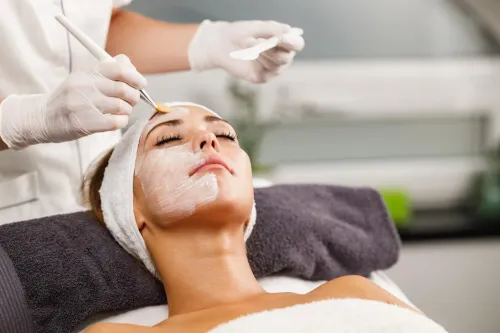
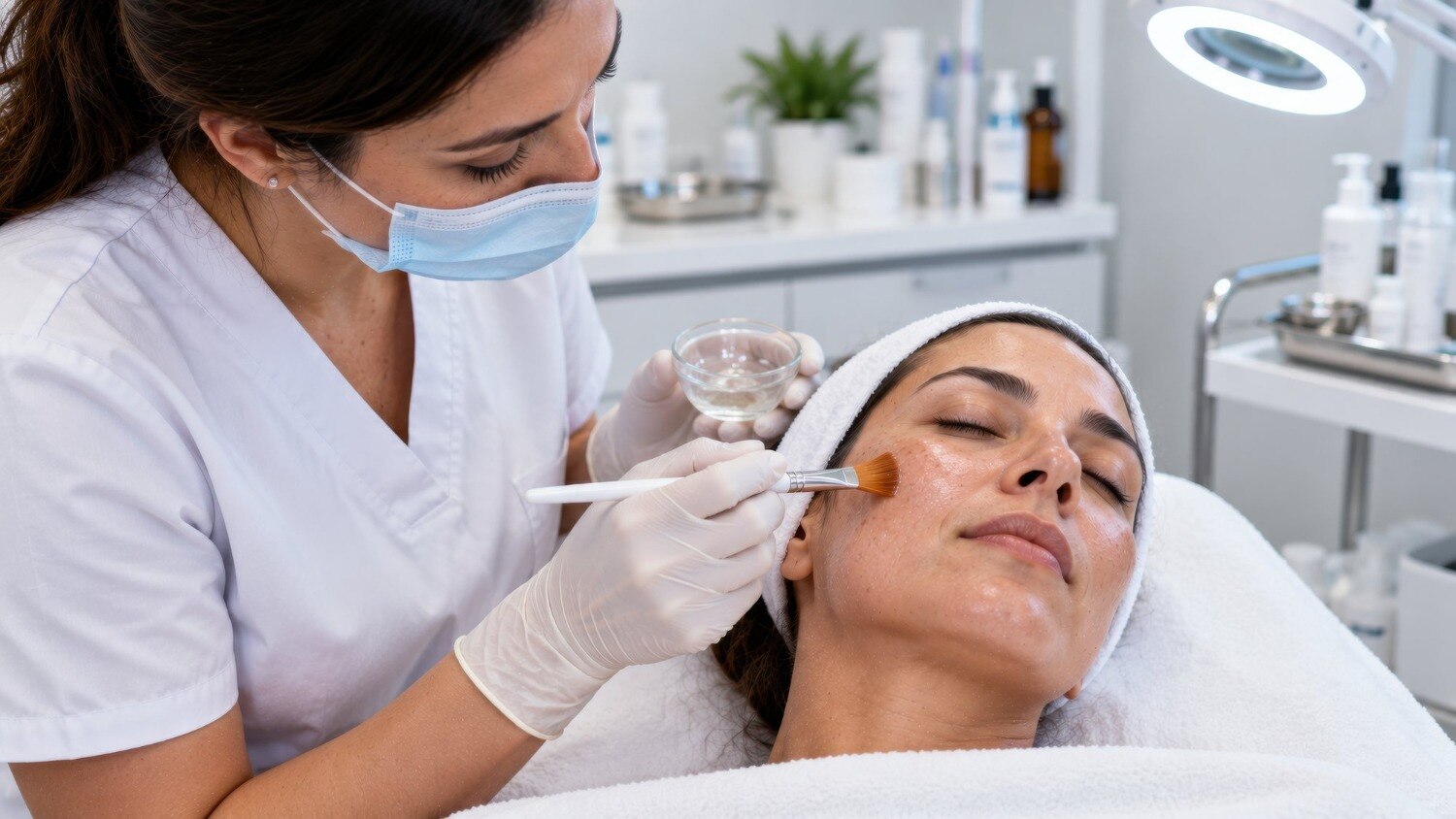
| Chemical peel | Cleansed skin receives a solution brushed on for a defined contact time | Warmth, redness, peeling, crusting, or darker temporary pigment |
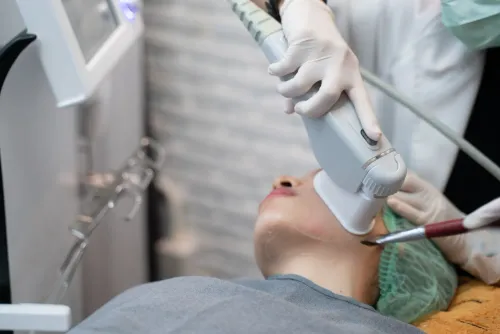
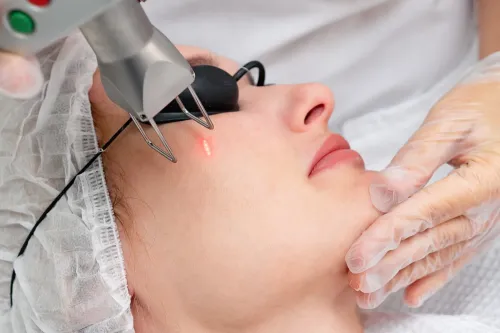
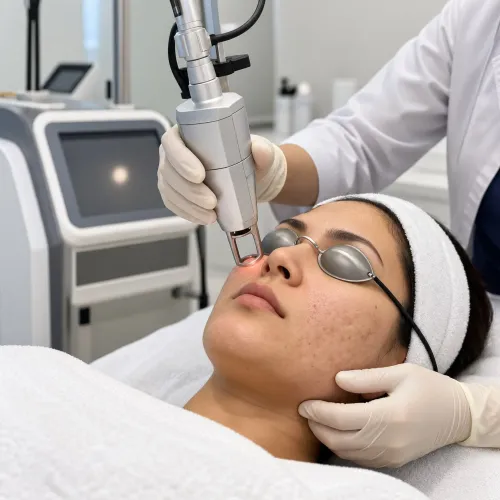
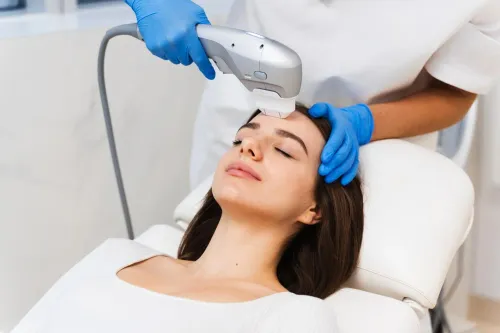
| Laser | The clinician cleanses, photographs or marks the area, then makes repeated passes | Warmth, redness, swelling, temporary darkening, or crusting |
Topical anaesthetic is used when appropriate, and appointment length depends on the area and procedure. Wear prescribed laser eye protection throughout laser treatment.
Follow the clinic’s procedure recovery skincare plan: use a gentle cleanser, avoid heat, strenuous exercise, swimming, shaving treated skin, and makeup until instructed. Ask when makeup after chemical peel is permitted. Do not restart retinoids, acids, or vitamin C until the skin has healed.
Dr Purva Nucleus Eye And Skin Clinic can be useful when you want a doctor-led assessment linking diagnosis, procedure choice, and recovery instructions rather than selecting a treatment from a menu.
Related services
Lasers Laser toning is a non-invasive, low-energy laser treatment used to gently rejuvenate the skin and treat pigmentation, melasma, uneven skin tone,... View service → |
Cosmetic Procedures Acne treatment with chemical peels Chemical peels are a powerful, customizable treatment for facial rejuvenation, including issues like acne scars, hyperpigmentation, fine lines, sun... View service → |
How do you keep brightness from fading or pigment from returning?
SPF 30 or higher is the foundation of lasting pigment control: apply it every morning, reapply during outdoor exposure, and add a hat or shade. Use a tinted sunscreen containing iron oxides when visible light worsens melasma.
A smoother glow is not the same as reduced melanin. Hydration, gentle exfoliation, and some skin boosters help the surface reflect light evenly, while pigment-targeting treatment reduces excess melanin; neither prevents new pigment from forming.
For melasma relapse prevention, keep the routine simple:
- Manage triggers, including heat, tanning, acne, eczema, and unnecessary irritation. Do not combine multiple acids, scrubs, retinoids, and bleaching products to chase faster results.
- Treat melasma as chronic and relapsing. Maintenance is part of treatment, not proof that a procedure failed.
- Ask a dermatologist about oral tranexamic acid melasma treatment only when melasma is difficult to control. It is an off-label systemic medicine requiring screening for clotting risk, medical history, and interacting factors; relapse after stopping is common.
- Avoid unregulated lightening creams without transparent ingredients. The risks of unregulated skin-lightening creams include undeclared corticosteroids, mercury, or hydroquinone, causing steroid-damaged skin, mercury toxicity, dermatitis, or persistent pigment changes.
- Seek review for blistering, severe pain, infection, prolonged swelling, gray-white patches, or pigment that worsens after treatment.
The safest plan combines a confirmed diagnosis, tolerable home care, carefully selected procedures, and realistic maintenance.
Frequently asked questions
What causes dull or uneven skin tone?
Common causes include dehydration, surface scale, post-inflammatory hyperpigmentation, melasma, sun-induced lentigines, redness, acne, medicines, and other skin diseases.
Which ingredients should you try first for dull skin?
Start with gentle cleansing, moisturising, daily broad-spectrum sunscreen, and suitable ingredients such as niacinamide, vitamin C, azelaic acid, retinoids, or hydroxy acids.
How do brightening procedures differ?
Chemical peels, lasers, intense pulsed light, and microneedling address different concerns, so the choice depends on whether you have pigment, texture, redness, acne, or melasma.
What should you expect before and after a brightening treatment?
Discuss your diagnosis, skin sensitivity, medicines, pregnancy status, downtime, risks, and maintenance plan; follow aftercare instructions and avoid picking or excess sun exposure.
How can you prevent uneven pigmentation from returning?
Apply broad-spectrum SPF 30 or higher every morning, reapply during outdoor exposure, control inflammation, avoid irritating products, and continue the maintenance plan.
Related service
Lasers Q switch laser - for pigmentation The Q switch laser is an anti-pigment laser . It simply breaks down pigment in the deeper layers of your skin - leaving you with an even skin tone... View service → |