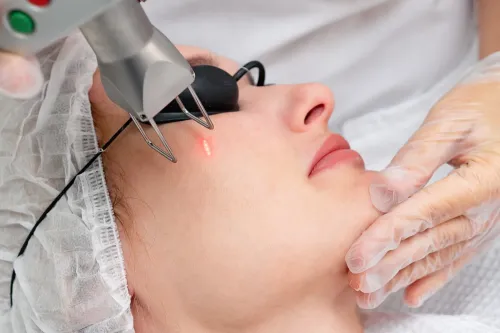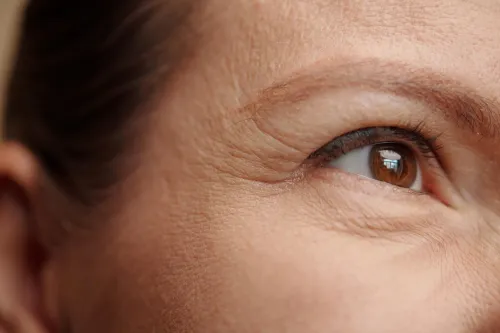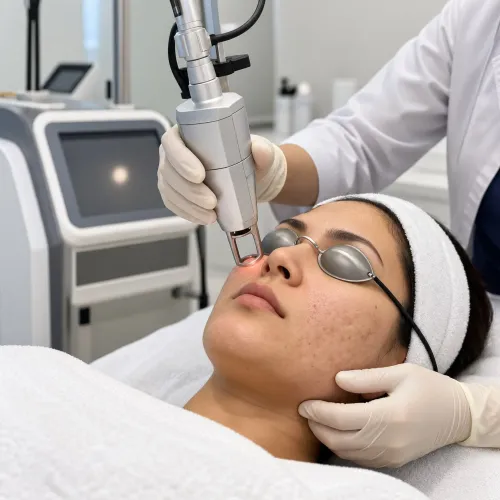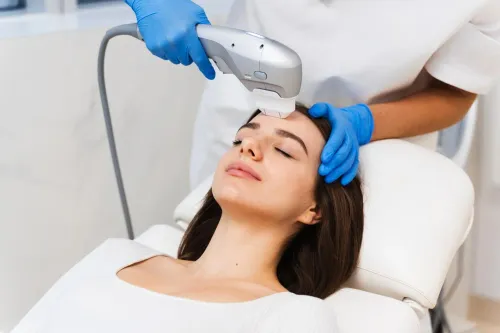
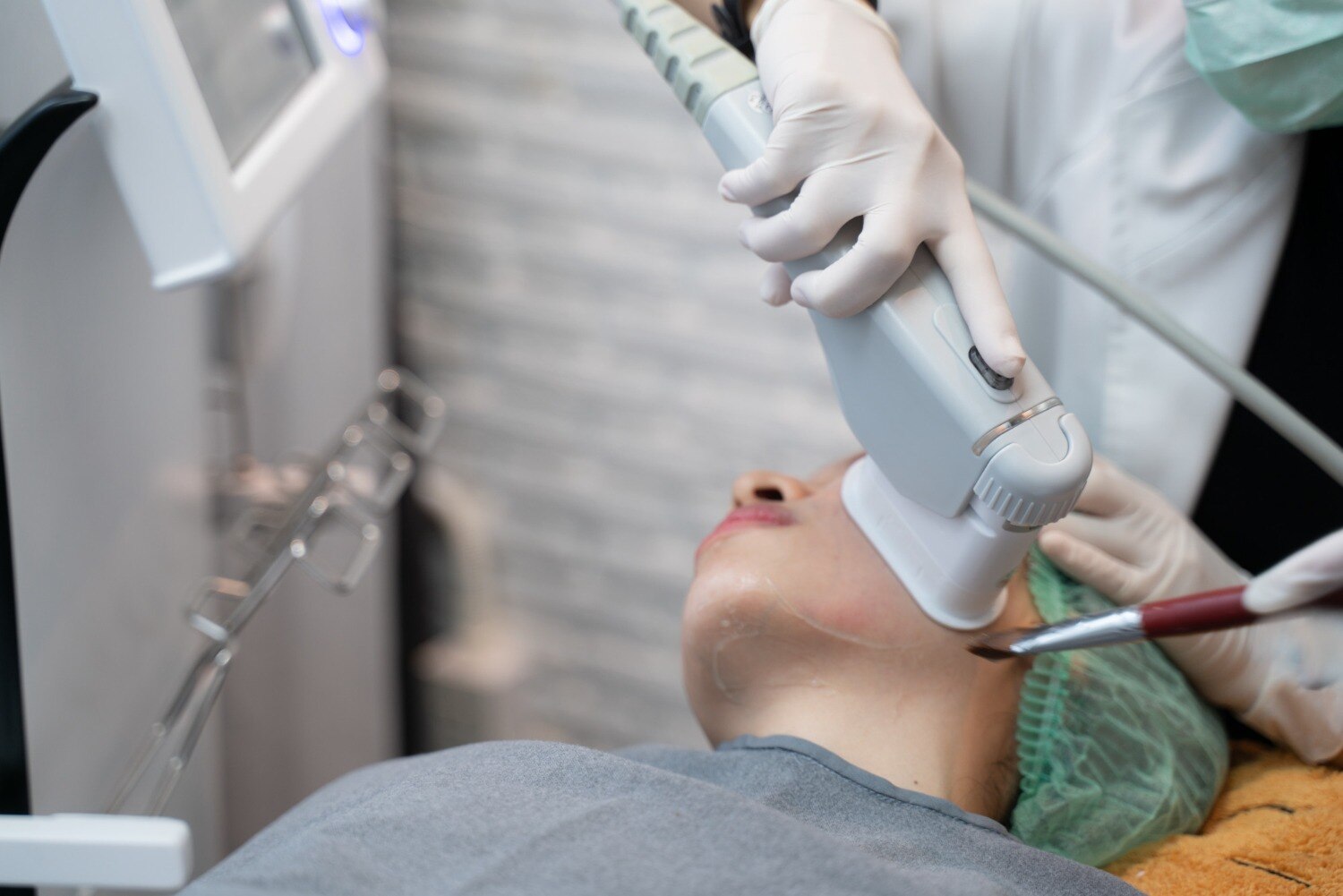
A softer jawline, jowls or a folded neck does not always mean the same thing: loose skin, lost volume, excess fat and prominent neck muscles require different solutions. By separating those causes and comparing treatment depth, downtime, expected lift and risks, you can decide whether a nonsurgical procedure is appropriate or whether a facelift or neck lift deserves assessment.
Key takeaways
- Identify whether laxity comes from skin, fat, hollowing or muscle movement.
- Match treatment depth and area before choosing a skin-tightening procedure.
- HIFU targets deeper tissue; radiofrequency focuses on heating skin and improving firmness.
- Compare non-surgical results with facelift or neck-lift reliability before deciding.
First identify what is making the face or neck look loose
True skin laxity is excess, weakened skin that folds or hangs when your face and neck are relaxed. What people call loose skin on face or loose skin on neck may instead be hollowing, wrinkles, fat, or muscle movement, and each needs a different solution.
Check these clues before choosing treatment:
- Gently pinch the area. A thin, crepey fold that remains when you release it supports laxity; a hollow cheek or temple points to facial volume loss.
- Compare the face at rest and while smiling. Fine lines that deepen with expression are muscle-related; etched lines and rough texture are surface ageing, not necessarily sagging.
- Inspect the jawline and under-chin area from the side. Fat creates fullness, while a hanging skin fold remains after weight is stable. For jowls versus lost volume, look for a drooping lower-cheek fold rather than a hollow beside the mouth.
- Ask the clinician to assess platysmal bands, chin projection, enlarged glands and submental fat. A prominent neck muscle can create bands or pulling that a skin-tightening procedure will not correct.
| Cause | Typical clue | Treatment implication |
|---|---|---|
| Skin laxity | Pinchable, hanging fold | Tightening or lifting assessment |
| Volume loss | Hollow cheek, temple or lip | Selective volume restoration |
| Fat or muscle change | Fullness, band or neck bulge | Fat, muscle or surgical assessment |
Match the treatment to the area and the depth of laxity
Mild cheek laxity usually suits radiofrequency or focused ultrasound, while deeper sagging needs a treatment that reaches supporting tissue. Radiofrequency microneedling adds controlled needles for dermal tightening and crepey texture. Marked folds or excess skin need surgical assessment, not repeated device sessions.
| Area | Suitable options | What the treatment can and cannot do |
|---|---|---|
| Cheeks | Radiofrequency, HIFU, radiofrequency microneedling | Supports mild-to-moderate cheek tightening; it cannot replace lost volume or lift heavy hanging skin. |
| Jawline | HIFU, radiofrequency, radiofrequency microneedling | Helps define a mildly blurred border; substantial jowls need a stronger jowl treatment, such as a facelift assessment. |
| Jowls | HIFU or radiofrequency for early laxity; facelift for marked laxity | Devices may soften early drooping, but they do not remove a hanging fold. |
| Under-chin skin | HIFU, radiofrequency, radiofrequency microneedling | Provides under-chin skin tightening when loose skin is the main problem; fat or platysmal bands require different treatment. |
| Horizontal neck lines | Radiofrequency microneedling, laser resurfacing, superficial resurfacing treatments | Improves fine lines and crepey texture more reliably than it lifts neck skin. |
| Front of the neck | Radiofrequency or HIFU for mild skin laxity; neck lift for excess skin | A device will not correct prominent platysmal bands, submental fat, weak chin projection or enlarged glands. |
The front of the neck needs anatomical diagnosis before choosing a device. A large hanging neck fold or severe jowling is unlikely to improve adequately without surgery, which tightens deeper tissues and removes excess skin.
How HIFU, radiofrequency and microneedling radiofrequency differ
The main difference is where energy is deposited: HIFU for loose skin uses focused ultrasound at selected deeper tissue planes, while radiofrequency skin tightening heats tissue through electrical current. Neither removes excess skin, and both usually deliver a modest, gradual improvement rather than a facelift-level lift.
| Option | What it does | Expected improvement |
|---|---|---|
| HIFU | Focused ultrasound creates precise thermal points beneath the skin, encouraging collagen contraction and remodeling. | Subtle-to-moderate tightening along the jawline, cheeks or under-chin area; thin skin, low facial fat or severe laxity can make it unsuitable. |
| Non-invasive radiofrequency | Broadly heats the dermis and sometimes underlying tissue to stimulate collagen remodeling. | Mild-to-moderate improvement in firmness and fine crepey texture, usually without a dramatic change in hanging skin. |
| Microneedling radiofrequency | Insulated or uninsulated needles enter the skin, then release radiofrequency heat at a chosen depth. | Firmness plus improvement in scars, pores and texture; it does not reliably lift heavy jowls or remove a neck fold. |
Microneedling radiofrequency is more invasive than ordinary microneedling. Incorrect depth or energy can cause burns, scarring, infection, nerve injury or unwanted fat loss, so a trained clinician must select the needle depth and settings. A device name alone cannot predict the result: treatment area, skin thickness, facial fat and operator technique matter.
Expect improvement over months, not a permanent replacement for surgery.
Separate genuine lifting from texture improvement and injectable contouring
A smoother surface is not a lifted face: these treatments improve texture, volume or contour, while substantial laxity requires removal or repositioning of excess tissue.
| Option | What it improves | When it fails to correct major laxity |
|---|---|---|
| Sculptra | Gradual collagen support and selected volume loss | Sculptra for skin laxity cannot tighten hanging skin or a heavy jowl |
| Dermal fillers | Hollow cheeks, temples or chin definition | Dermal fillers and loose skin are a poor match when added volume would make the face heavier |
| Laser resurfacing | Fine lines, crepey texture, pigmentation and surface photoaging | It cannot remove excess skin; aggressive treatment adds downtime and pigment risk |
| Microneedling | Acne scars, fine texture and microneedling for wrinkles | Punctures stimulate remodeling but cannot excise a fold of skin |
| Skin boosters | Hydration and a fresher, smoother surface | Hydration does not create mechanical lift |
| Laser toning | Uneven pigmentation and mild surface dullness | It has little effect on hanging skin or jowls |
| Chemical peels | Texture, fine lines and pigmentation | They resurface; they do not tighten substantial facial or neck excess |
Choose injectables when volume loss causes the hollow or contour problem, not as a substitute for lifting. Choose resurfacing, microneedling, skin boosters, laser toning or peels when surface quality is the main complaint.
Marked jowling, a hanging neck fold or substantial excess skin is unlikely to respond adequately to these options. A facelift or neck-lift assessment provides the more honest comparison.
Know when a facelift or neck lift is the more reliable comparison
Marked jowling, a large fold of hanging neck skin or a heavy neck contour warrants a surgical assessment rather than repeated device treatments. These features indicate excess skin or deeper structural changes that surface heating and focused ultrasound cannot physically remove.
A facelift for loose skin repositions deeper supporting tissues and removes excess facial skin. A neck lift can address hanging neck skin, loosened tissue beneath the chin and selected platysmal changes.
Surgical skin tightening offers a larger lift than noninvasive treatment, but it involves anaesthesia, recovery, scarring and risks such as bleeding, infection, nerve injury and recurrent laxity.
Ask a surgeon to identify the anatomy before choosing an operation:
- Marked jowls that remain when you relax your face
- Skin that folds or hangs beneath the chin
- A heavy neck contour caused by excess skin, submental fat or platysmal bands
- Weak chin projection, enlarged glands or another deeper cause of fullness
- Little improvement after a properly performed device treatment
Fillers can restore lost volume but cannot remove a fold of skin. Adding volume to an already heavy lower face can increase fullness instead of producing a lift. A consultation does not commit you to surgery; it clarifies whether a device, liposuction, neck lift or combined plan matches the cause.
Use safety, skin type and clinician assessment to choose a procedure
At Dr Purva Nucleus Eye And Skin Clinic, ask for a written plan covering the diagnosis, device or procedure, settings, sessions, expected result, downtime, aftercare and review date.
- Review your skin tone, prior pigment reactions, sun exposure and need for a test spot.
- Ask whether the exact model is among FDA-cleared skin tightening devices; clearance does not prove a facelift-level result.
- Confirm medical suitability, including medicines, active infection, cold sores, pregnancy or implanted electrical devices. Discuss skin tightening risks, including burns, numbness, scarring and post-inflammatory hyperpigmentation.
| Option | Check before treatment | Main trade-off |
|---|---|---|
| Energy device | Model, settings and cooling | Modest lift; recovery varies |
| Laser or RF microneedling | Wavelength, depth and pigment plan | More downtime and pigment risk |
| Surgery | Surgeon’s plan for skin, muscle and fat | Greater recovery and surgical risks |
Frequently asked questions
How can you tell what is making your face or neck look loose?
Relaxed folds or hanging skin suggest laxity, while hollowing, wrinkles, fat and muscle movement require different treatments.
How do HIFU, radiofrequency and microneedling radiofrequency differ?
HIFU delivers focused ultrasound deeper beneath the skin, radiofrequency heats tissue to improve firmness, and microneedling radiofrequency combines needles with controlled heat for skin and texture changes.
Do skin-tightening treatments lift the face, improve texture or contour with injectables?
These goals are different: tightening addresses laxity, texture treatments target pores and scars, and injectables restore volume or alter contours rather than removing excess skin.
When is a facelift or neck lift more reliable than a non-surgical treatment?
Surgery is the more reliable comparison when you have substantial excess skin, pronounced jowls or neck folds and want a stronger structural lift.
How should you choose a safe treatment for loose skin?
Choose after an in-person clinician assessment of laxity depth, treatment area, skin type, medical history and the procedure's risks.