Q-switched laser is not a universal treatment for every brown, grey or blue mark. The correct recommendation depends on the diagnosis, pigment depth, skin type, recent sun exposure and whether another treatment would address the cause more safely. By the end, you will know which conditions may respond, which require caution, and what a proper consultation should establish before treatment.
Key takeaways
- Use Q-switched laser only after confirming the pigment diagnosis.
- Ask whether the mark is suitable for a targeted laser wavelength.
- Postpone treatment over active infection, irritation, or an unhealed wound.
- Discuss recurrence, side effects, and sun protection before treatment.
Which Pigmentation Diagnoses May Respond to Q-Switched Laser?
Q-switched laser is most useful for a confirmed, discrete pigment target, not for every brown mark.
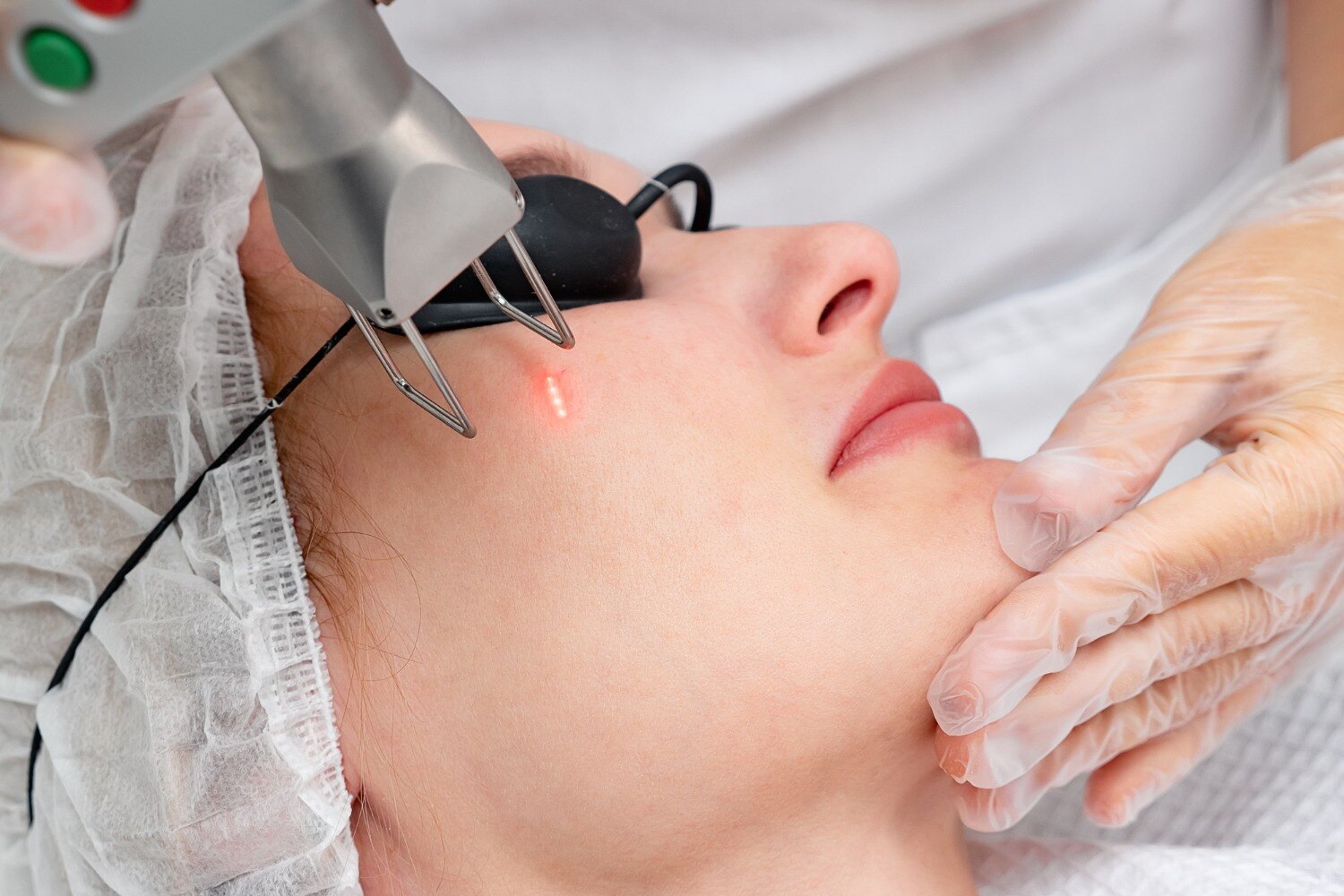
In Q switch laser pigmentation, “Q-switched” describes the short pulse delivery, not one specific laser: 532 nm targets superficial melanin and some tattoo colours; 694 nm ruby, 755 nm alexandrite and 1064 nm Nd:YAG reach different pigment depths and absorption profiles.
| Diagnosis | Why it may respond | What to expect |
|---|---|---|
| Solar lentigines | Localised epidermal melanin absorbs the selected wavelength | Solar lentigines laser treatment may lighten spots relatively quickly, but new sun spots and recurrence remain possible |
| Some freckles | Discrete superficial pigment can be targeted | Freckles laser treatment does not prevent ultraviolet-driven freckles from returning |
| Post-inflammatory hyperpigmentation | Treatment may reduce residual pigment after the trigger has settled | Post-inflammatory hyperpigmentation laser treatment should wait until dermatitis, acne or infection is controlled; irritation can darken it further |
| Naevus of Ota or naevus of Ito | Deeper melanocytes can respond, commonly to 1064 nm Nd:YAG | Several staged sessions are common, with residual pigment or recurrence possible |
| Tattoo pigment | Ink particles absorb selected wavelengths | Different ink colours need different planning; several sessions and healing intervals are expected, and some cosmetic pigments can darken |
A lentigo is not equivalent to dermal melanocytosis, active post-inflammatory pigment or tattoo ink. Pigment depth, skin type, lesion size and wavelength determine the response; one session should not be promised.
Laser lightens treated pigment only, so broad-spectrum sunscreen, protective clothing and avoidance of tanning remain necessary to reduce new or recurrent freckles and solar lentigines.
How Is the Pigmented Mark Diagnosed Before Laser?
Laser should follow a diagnosis, not replace one. Accurate dermatologist pigmentation diagnosis begins with examination under suitable lighting and comparison of the mark with the surrounding skin. If the pattern is uncertain, dermoscopy for pigmented lesion reveals colours and structures that are invisible to the naked eye.
Ask when the mark appeared and whether it is enlarging. Report any new asymmetry, irregular border, multiple colours, itching, crusting or bleeding.
- An atypical or changing lesion may need a biopsy before treatment. Laser can destroy the tissue required for histological diagnosis and delay recognition of melanoma.
- Tell the dermatologist about active dermatitis, infection, previous procedures, abnormal scarring, or earlier darkening or lightening after treatment.
- List medicines and supplements that increase photosensitivity or bleeding, and mention pregnancy when relevant to an elective procedure.
The consultation separates melasma, post-inflammatory hyperpigmentation, a solar lentigo, naevus of Ota, medication-related pigmentation and other look-alike lesions. Melasma diagnosis matters because heat and inflammation can worsen its underlying pigment tendency; a superficial spot and dermal melanocytosis also require different plans.
Postpone assessment for treatment if the area is inflamed, infected, recently tanned or still unexplained. No laser setting can compensate for an incorrect diagnosis. Destroying a suspicious mark first may remove the evidence needed to choose safe, effective care.
When Is Q-Switched Laser Better Than Other Options?
A Q-switched laser is most straightforward for a confirmed, discrete pigment target when the expected lightening outweighs recurrence or pigment-alteration risk. It is not the default for every brown patch.
1. Start with the cause. If ultraviolet exposure drives new or recurrent pigmentation, use broad-spectrum sunscreen, protective clothing and tanning avoidance before considering a device. For diffuse melasma or post-inflammatory hyperpigmentation, topical treatment is usually preferable while inflammation, hormones, irritation or another trigger remains active.
2. Match the treatment to the pattern.
| Option | Best fit | Main limitation |
|---|---|---|
| Q-switched laser | Discrete epidermal pigment, such as a solar lentigo or selected freckle | Does not prevent new spots; recurrence or colour change remains possible |
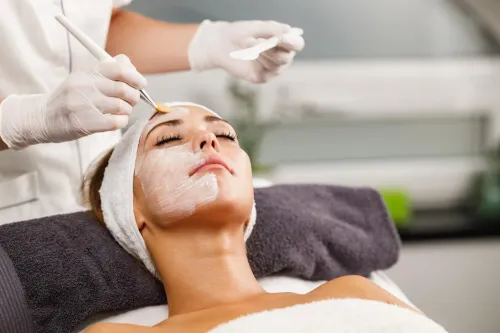
| Chemical peel | Selected superficial, widespread pigment | Irritation can worsen post-inflammatory pigmentation; the Q switch laser vs chemical peel choice depends on diagnosis and skin response |
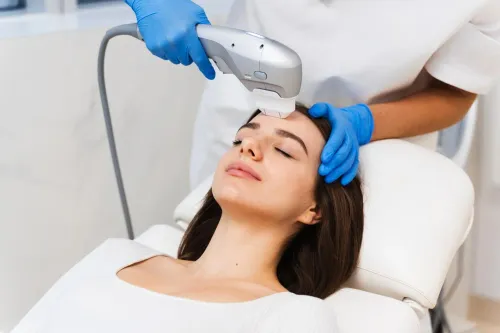
| Intense pulsed light | Certain sun-related colour and vascular changes | Not equivalent to a pigment-specific laser; the Q switch laser vs IPL decision depends on both findings |
| Fractional laser | Textural scars with uneven pigment | Treats texture rather than isolated pigment alone |
3. Treat melasma cautiously. Low-fluence repeated 1064 nm treatment, called laser toning melasma, can lighten skin briefly but relapse, mottled hypopigmentation, rebound darkening and worsening are recognised melasma laser treatment risks. Controlling ultraviolet and visible light, reducing melanogenesis and avoiding heat or inflammation remain central.
4. Choose Q-switched treatment only after diagnosis confirms a suitable target. A discrete lesion earns consideration; active diffuse disease does not.
When Should Treatment Be Postponed or Avoided?
Postpone treatment when the diagnosis or skin is not stable. Q-switched laser contraindications include an undiagnosed or changing lesion, active infection, uncontrolled dermatitis or other inflammation, a recent tan or sunburn, and pigmentation caused by an untreated medicine or skin condition.
- Arrange diagnosis before laser if the mark is enlarging, changing colour or border, bleeding, crusting or behaving differently from surrounding skin.
- Treat infection, dermatitis and the underlying pigment trigger before considering laser.
- Delay treatment after tanning or sunburn until the skin has returned to its usual colour and is no longer tender.
- Discuss pregnancy, photosensitising or blood-thinning medicines, previous abnormal reactions and healing problems before an elective procedure.
- Report a personal tendency toward keloids or a history of post-inflammatory hyperpigmentation after laser; these findings require a risk discussion, not automatic treatment.
Q switch laser risks Indian skin are higher with Fitzpatrick skin types IV to VI, recent tanning and deeper dermal pigment. Laser treatment in Fitzpatrick skin type IV to VI carries greater risk of burns, prolonged darkening, hypopigmentation and recurrence, particularly when heat or inflammation triggers new pigment.
Risk reduction may include conservative fluence, a wavelength matched to pigment depth, a test spot and longer intervals between sessions. A test spot cannot guarantee that a later complication will not occur.
Redness, swelling, pinpoint bleeding, crusting or temporary darkening can be expected endpoints. Excessive energy, overlapping pulses or poor aftercare can cause blistering, scarring, infection, persistent colour change and post-inflammatory hyperpigmentation after laser.
What Should You Expect From a Proper Q-Switched Laser Consultation?
A proper Q-switch laser consultation should end with a diagnosis and risk plan, not simply a device name. Ask which wavelength is selected—532 nm, 694 nm, 755 nm or 1064 nm—and why it matches the pigment’s depth, your skin type and the diagnosis.
| Option | Why it may be chosen | Question to ask |
|---|---|---|
| Q-switched laser | Discrete pigment needing targeted treatment | Why is this preferable here? |
| Topical treatment | Diffuse melasma or active post-inflammatory pigmentation | Could treating the cause work more safely? |
| Another device or peel | Widespread pigment, vascular change or texture concern | What benefit and risk differ? |
Your Q switch laser consultation should also establish:
- The likely number of Q switch laser sessions, healing intervals and chance of recurrence.
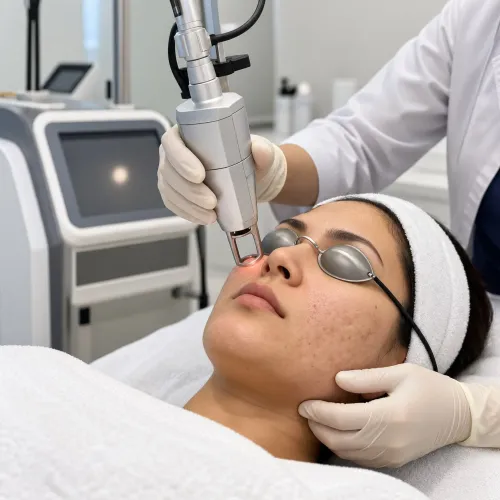
- Whether topical anaesthetic is appropriate, what wavelength-specific eye protection will be used, and the appointment duration confirmed by the treating clinic.
- Whether redness, swelling, pinpoint crusting or temporary darkening is expected, and which changes require review.
Follow the clinic’s Q switch laser aftercare instructions: use broad-spectrum sunscreen, protective clothing, gentle cleansing and strict avoidance of tanning and excessive heat. Do not pick crusts or darkened skin remnants.
A doctor-led visit at Dr Purva Nucleus Eye And Skin Clinic can help when diagnosis, skin type, previous treatment or pigment depth makes pigmentation laser treatment in Santacruz uncertain. Use it to obtain a documented diagnosis and risk plan, not to treat “Q-switch” as an automatic recommendation.
Related services
Lasers Q switch laser - for pigmentation The Q switch laser is an anti-pigment laser . It simply breaks down pigment in the deeper layers of your skin - leaving you with an even skin tone... View service → |
Lasers Laser toning is a non-invasive, low-energy laser treatment used to gently rejuvenate the skin and treat pigmentation, melasma, uneven skin tone,... View service → |
Frequently asked questions
Which pigmentation diagnoses may respond to Q-switched laser?
Q-switched laser may suit confirmed, discrete pigment targets such as selected lentigines, tattoos, and some melanocytic or dermal pigment conditions. The diagnosis and pigment depth determine suitability.
How is a pigmented mark diagnosed before laser?
A clinician examines the mark with the naked eye and dermoscopy, reviews its history, and checks for warning signs. A biopsy may be needed when the diagnosis is uncertain or the lesion looks suspicious.
When is Q-switched laser better than other pigmentation treatments?
It is most useful when pigment is concentrated in a clearly defined target and a short, precise treatment is preferable to treating a broad area. Creams, peels, fractional lasers, or no treatment may be better for diffuse or inflammatory pigmentation.
When should Q-switched laser treatment be postponed or avoided?
Postpone treatment over active infection, dermatitis, open wounds, recent tanning, or uncontrolled inflammation. Avoid laser when a mark has not been properly diagnosed or shows features that require medical evaluation first.