Early jowling, a softer jawline or slight neck looseness can be frustrating when you are not ready for surgery. You will learn how focused ultrasound works below the skin, whether your laxity fits treatment, what an appointment feels like and how to judge a realistic result.
Key takeaways
- HIFU targets supportive tissue beneath intact skin without surgical incisions.
- Mild laxity, early jowls, and reduced jawline definition may suit HIFU.
- Expect brief heat, pressure, or sharp pulses during treatment.
- Visible tightening develops gradually, with results varying by tissue laxity and response.
How focused ultrasound reaches the tissue that supports the skin
HIFU sends high-intensity focused ultrasound through the skin and concentrates acoustic energy at selected depths beneath the surface. Its HIFU mechanism creates small thermal coagulation zones while leaving the epidermis intact, so it tightens rather than resurfaces the skin.
Common facial protocols use approximate treatment depths:
- 1.5 mm: superficial tightening within the skin
- 3.0 mm: deeper support within the dermis and upper subcutaneous tissue
- 4.5 mm: treatment near the SMAS layer, the fibromuscular sheet that supports facial skin
The controlled thermal injury causes existing collagen fibres to contract. During the following weeks and months, collagen remodelling builds a gradual tightening effect rather than an instant lift.
| Treatment | Main target or action | What it does not do |
|---|---|---|
| HIFU | Focused ultrasound below the surface | Does not remove the epidermis or reposition tissue |
| Laser resurfacing | Controlled surface injury | Does not primarily target the SMAS layer |
| Radiofrequency | Heating through electrical energy | Does not use focused ultrasound zones |
| Injectables | Adds volume or changes muscle activity | Does not tighten the SMAS layer directly |
| Facelift surgery | Removes and repositions skin and supporting tissue | Requires incisions and surgical recovery |
Reaching the SMAS layer with ultrasound does not reproduce a facelift. HIFU cannot remove excess skin or physically reposition tissue; it is a tightening treatment for mild laxity, not resurfacing or surgery.
Which signs of laxity make HIFU a reasonable option
Mild skin laxity is a reasonable HIFU concern when you notice early jowling, slight cheek descent, a softer jawline, mild neck looseness or reduced firmness without substantial excess skin. The change is gradual rather than a heavy fold of hanging skin.
| Area | Signs that fit mild laxity | Planning point |
|---|---|---|
| Lower face and jawline | Early jowling or less defined jawline | Jawline tightening may help when skin excess is limited |
| Submental area and neck | Mild looseness beneath the chin or along the neck | Submental HIFU requires careful depth selection |
| Cheeks and brow region | Slight cheek descent or reduced brow firmness | Thin skin and bony areas need conservative mapping |
A proper assessment examines laxity, skin thickness, facial fat distribution, bone anatomy and your treatment goal. Those factors determine whether HIFU should target the lower face, jawline, submental area, cheeks, brow region or neck, and which areas to avoid.
Treating a thin face with unnecessary energy can accentuate hollowness, while bony or anatomically vulnerable regions can be more painful and prone to complications.
Marked jowling, heavy loose skin or major platysmal and neck changes are less likely to respond adequately. Increasing energy is not a substitute for a surgical consultation; surgery may be more appropriate when excess skin or structural neck changes dominate.
HIFU fits best when you want gradual, modest firming rather than a facelift-level repositioning of tissue.
What happens during a HIFU appointment, and what does it feel like
Expect the HIFU procedure to begin with a medical consultation, not a device setting. The clinician examines laxity, skin thickness, facial fat, bone anatomy and your goal before deciding whether treatment is appropriate.
- Review active infection, open wounds, inflammatory skin disease and any history of abnormal scarring.
- Defer treatment during pregnancy; disclose breastfeeding and any pregnancy plans.
- Report pacemakers, implants, metal, threads, fillers or other materials so the clinician can check the specific system’s treatment manual.
- Map the face and mark areas to treat or avoid, especially thin, bony or anatomically vulnerable regions.
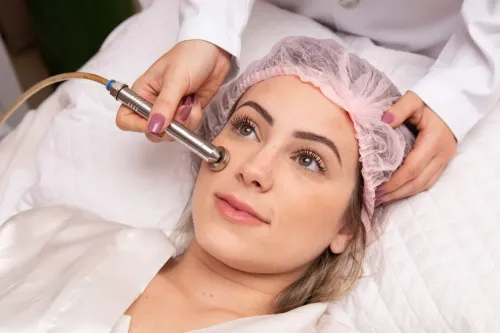
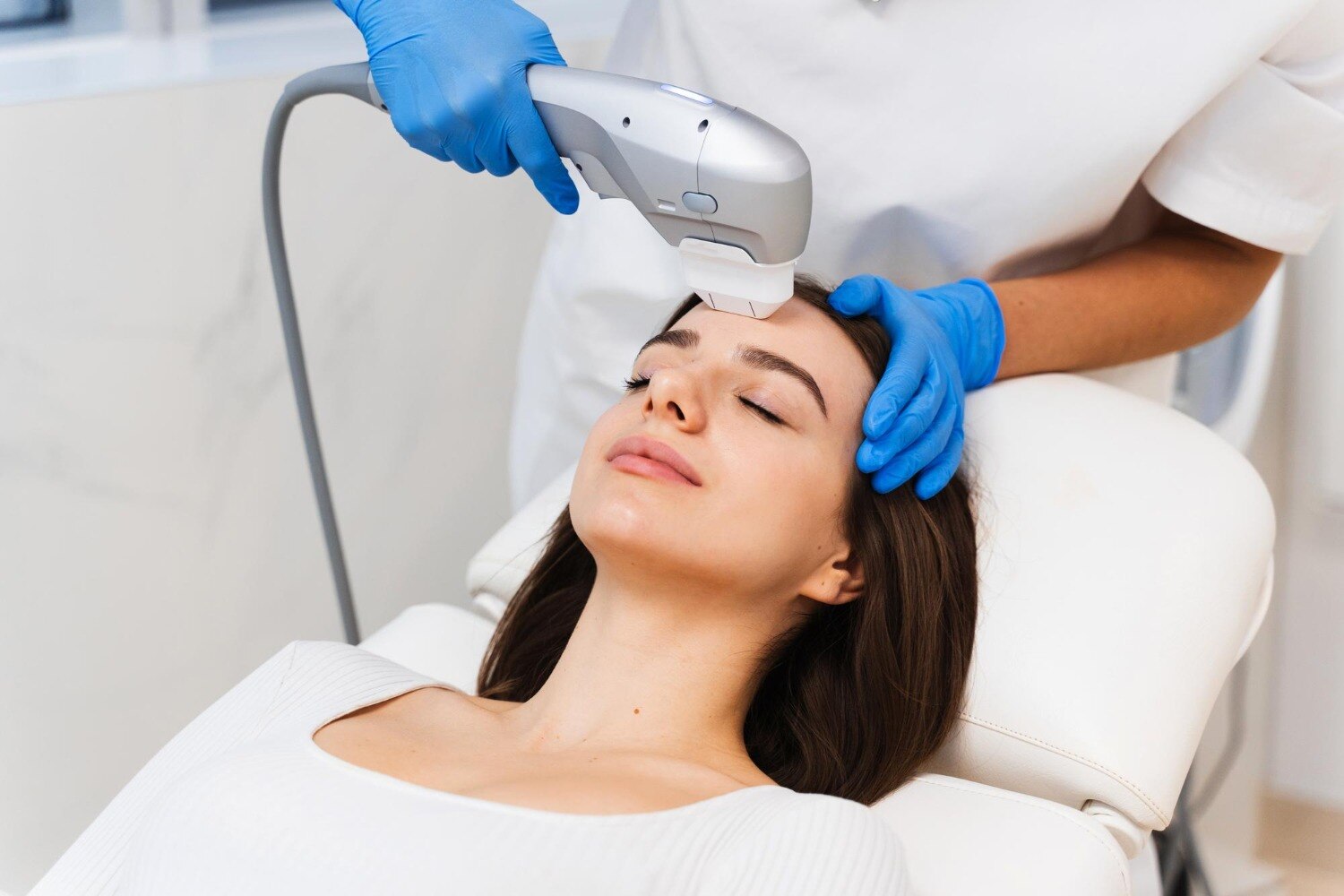
- Apply ultrasound gel, place the handpiece against the skin and deliver lines of focused energy at selected depths and settings.
You may feel pressure, heat and brief sharp or zapping sensations. HIFU discomfort varies by area and energy level; bony regions can feel more sensitive, but pain does not prove that a stronger result is being produced. Real-time ultrasound visualisation can confirm tissue layers and improve targeting, but it does not remove operator dependence.
Afterward, follow instructions about cleansing, sun protection and reporting worsening symptoms. Tenderness, redness, swelling, bruising, tingling or numbness can occur briefly. Uncommon risks include burns, prolonged sensory change, temporary facial weakness, fat loss and contour irregularity.
For doctor-led HIFU safety assessment in Santacruz, Dr Purva Nucleus Eye And Skin Clinic can connect the decision with dermatology and dermatosurgery rather than treating it as a routine device session.
When the tightening becomes visible and how much change to expect
1. The HIFU results timeline is gradual: early swelling or temporary tissue contraction can make the face look tighter, but neither proves the intended result. Collagen remodelling time commonly becomes clearer at roughly two to three months and may continue developing for several more months.
2. Do not accept a promised HIFU session duration before assessment. Appointment length depends on the number of areas, treatment design and device; a lower-face session and a face-and-neck plan are not equivalent.
3. Set expectations at modest lifting or tightening, not a facelift-equivalent change. Studies report variable results because devices, treatment depths, energy settings, skin quality and follow-up differ, so a single percentage or guaranteed duration is unreliable.
4. Choose one session or a staged plan only after a clinician examines your laxity, skin thickness, facial fat distribution, bone anatomy and treatment goal. Repeated treatment should follow reassessment, not an automatic calendar; unnecessary energy can worsen hollowness or contour problems, particularly in thin faces.
5. Discuss HIFU maintenance individually. HIFU does not stop future ageing, sun damage or volume change, so laxity can return even after collagen remodelling produces visible improvement. Ask when review will occur and what finding would justify another treatment.
How to decide whether HIFU fits your specific concern
Choose HIFU if you want gradual firming beneath intact skin, limited surface downtime and a modest improvement in early laxity. A suitable HIFU candidate has realistic expectations and does not need pigment correction, etched-line treatment, acne-scar resurfacing or substantial volume replacement.
| Option | Main target | What it does not replace |
|---|---|---|
| HIFU vs radiofrequency | Focused ultrasound reaches selected deeper layers; radiofrequency heats tissue through electrical energy | Neither directly corrects pigment, etched lines or major volume loss |
| HIFU vs laser | HIFU tightens below the surface; laser resurfacing treats the epidermis and dermis | HIFU does not resurface acne scars or etched lines |
| HIFU vs injectables | HIFU stimulates tightening; injectables restore volume or relax selected muscles | HIFU cannot directly replace lost cheek or temple volume |
| HIFU vs facelift | HIFU creates controlled thermal injury without repositioning tissue; a facelift removes and repositions excess tissue | HIFU is not a surgical correction for heavy skin or structural neck change |
HIFU avoids epidermal ablation and the peeling associated with resurfacing, but it can still hurt. Burns, prolonged sensory change, temporary weakness, fat loss and contour irregularity remain device- and operator-dependent risks.
Before choosing it, ask:
- Who will assess your face?
- Which depths and energy settings are planned?
- Does the system provide real-time tissue visualisation?
- Which areas will be avoided?
- What outcome is realistic, and what follow-up is available?
Choose HIFU when early laxity is the problem and your expectations are modest; seek surgical assessment when excess skin or structural neck changes dominate.
Frequently asked questions
How does HIFU reach the tissue supporting the skin?
Focused ultrasound passes through the skin and concentrates acoustic energy at selected depths beneath the surface. It creates small thermal coagulation zones while leaving the epidermis intact.
Which signs of laxity make HIFU a reasonable option?
HIFU may suit mild laxity, early jowls, a softening jawline, or slight loss of firmness when you want tightening without surgery.
What does a HIFU appointment feel like?
The clinician applies the device to selected areas. You may feel pressure, heat, or brief sharp pulses as ultrasound energy is delivered.
When does HIFU tightening become visible?
Tightening develops gradually rather than appearing immediately. The amount of change depends on your degree of laxity and individual tissue response.
How can you decide whether HIFU fits your concern?
Compare your concern with mild laxity and early loss of definition. Ask a qualified clinician to assess whether HIFU can address it or whether another treatment is more suitable.