Slight facial or neck laxity can reflect thinner skin, collagen loss, reduced volume, muscle activity or true excess tissue, and each cause responds to a different treatment. By the end, you will be able to identify the pattern you are seeing, compare tightening with injectables and surgery, and understand what a clinician must assess before recommending a procedure.
Key takeaways
- Separate mild laxity from volume loss before choosing treatment.
- Choose tightening first when facial structure remains intact.
- Compare ultrasound, radiofrequency, lasers and injectables by target and downtime.
- Ask about results, risks, recovery and maintenance before treatment.
Is the problem mild laxity, volume loss or excess skin?
Mild loose skin usually means a small amount of facial skin laxity, fine lines and crepey skin texture, without a heavy fold hanging below the jaw. The face may look less firm, while its basic shape remains intact.
Pronounced sagging creates marked jowls, deep folds or skin that gathers substantially when you pinch it; neck laxity becomes more advanced when loose skin forms heavy horizontal folds or a clear “turkey neck.”
Check the appearance in these situations:
- At rest: mild laxity appears as slight looseness around the cheeks, jawline or neck, not a large fold.
- With your head turned: neck skin may bunch modestly, but it should not create a broad hanging pouch.
- During facial movement: skin that looks loose only when you smile, frown or speak may reflect muscle activity rather than laxity.
- In consistent lighting: hollow cheeks, temples or under-eye areas suggest volume loss, while fullness beneath the chin points to submental fat rather than skin alone.
A tightening procedure cannot replace lost cheek volume, remove substantial fat or cut away excess skin. It also will not correct prominent platysmal bands, which appear as vertical neck cords during muscle contraction.
Mild laxity with reasonable skin quality is the situation in which non-surgical tightening is most likely to help; pronounced jowling or heavy neck skin deserves assessment for volume restoration, muscle treatment, liposuction or a facelift or neck lift instead.
When is skin tightening a sensible first step?
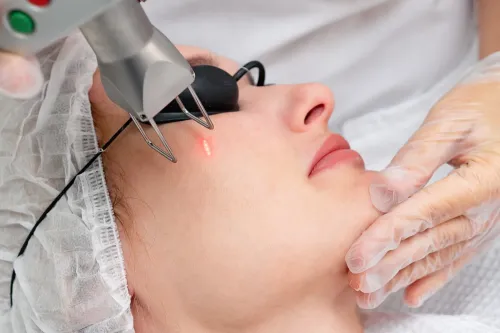
Skin tightening is a sensible first step when you have mild sagging, slight crepey texture or fine lines, and the skin still has enough elasticity to respond. Collagen remodelling can produce modest firming and soften early looseness on the face or neck, but it will not recreate the lift of a facelift or neck lift.
Choose it as an initial option when:
- The change is mild rather than pronounced, with no heavy overhang of skin.
- Your main concern is lax skin quality, not hollow cheeks or temples.
- You want gradual improvement and accept that maintenance will be needed.
- You have realistic expectations about a subtle, progressive result.
Another treatment addresses the main problem more directly when the looseness comes from something tightening cannot change.
Lost cheek volume may respond better to carefully planned volume restoration; prominent jowls or heavy neck folds may require surgical lifting or skin removal; enlarged submental fat needs fat reduction; and lines caused mainly by muscle movement need a muscle-relaxing treatment.
Ablative laser resurfacing can improve photodamaged, lax-looking skin while stimulating collagen, but its greater downtime and risk of pigment change, infection, prolonged redness and scarring make it a resurfacing procedure—not simply a stronger routine tightening treatment.
How do ultrasound, radiofrequency, lasers and injectables compare?
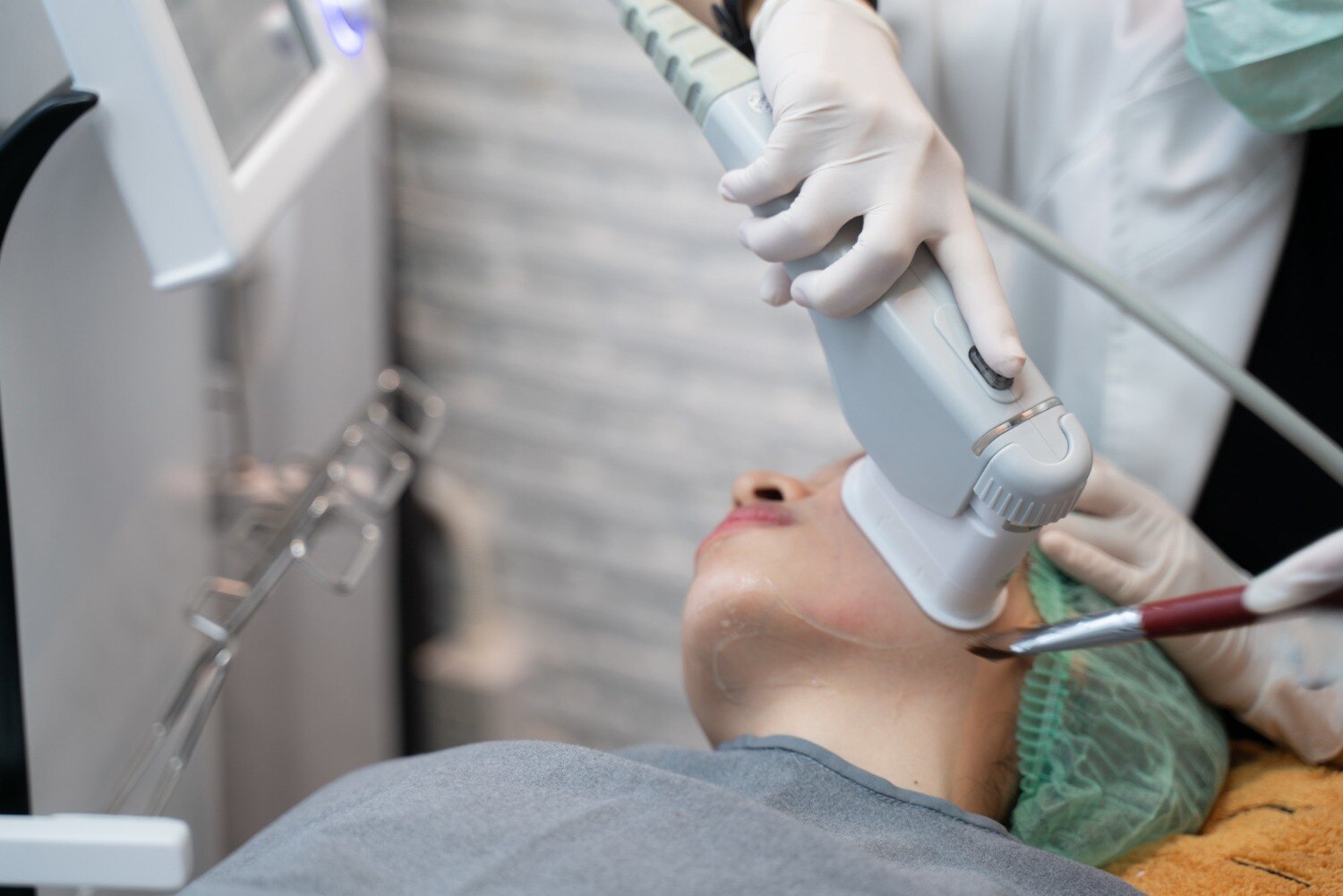
Ultrasound skin tightening and radiofrequency skin tightening fit mild laxity when the skin itself feels less firm. They do not replace lost cheek volume, remove substantial fat, or correct heavy excess skin. Choose by the main problem, not by the device label.
| Category | Best fit | Results, sessions and downtime |
|---|---|---|
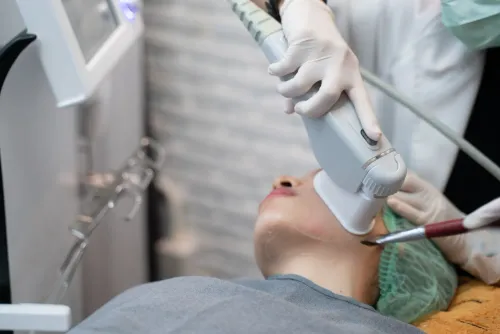
| Ultrasound skin tightening | Mild laxity on the face or neck | Firming develops gradually over weeks to months after collagen remodelling. Treatment is often planned as a session-based procedure, with temporary tenderness or swelling and little visible downtime. |
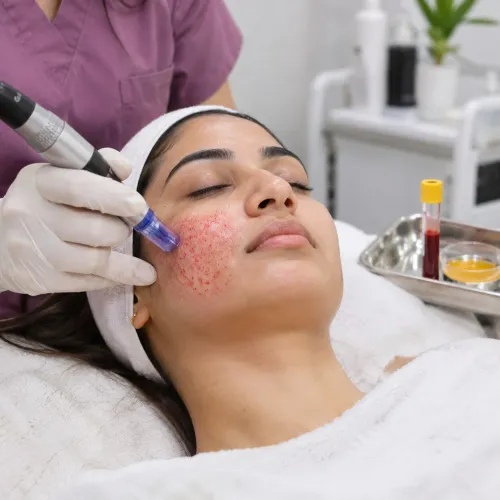
| Radiofrequency skin tightening | Mild laxity, crepey texture and selected poor-quality skin | Results build gradually rather than appearing immediately. The number of sessions depends on whether the device is monopolar, bipolar, fractional or microneedling RF; redness, swelling or pinpoint crusting varies accordingly. |
| Laser skin tightening | Photodamage, fine lines and uneven texture, especially when resurfacing is the priority | Non-ablative treatment usually has less downtime and subtler tightening. Ablative laser resurfacing can produce stronger surface change but requires more healing and carries greater risks of pigment alteration, infection, prolonged redness and scarring. |
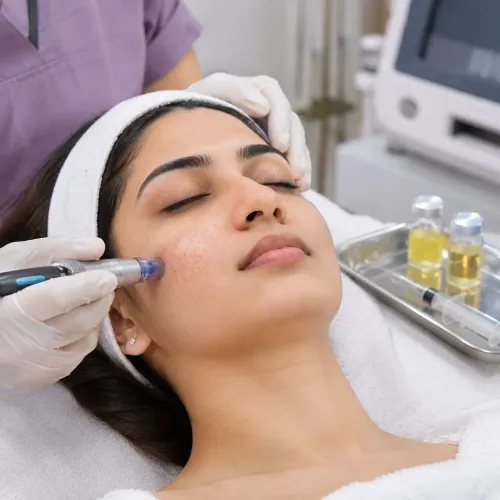
| Injectables | Volume loss, expression lines or poor skin quality | Fillers restore selected volume; botulinum toxin reduces movement-related lines; skin boosters improve hydration and fine texture rather than lifting lax tissue. Sessions and downtime vary from brief swelling or bruising to several days of recovery. |
A technically successful tightening treatment disappoints when muscle activity or volume loss caused the loose appearance. Ask which tissue is being treated, how many sessions the protocol uses, and what recovery the specific device requires. Facelift or neck-lift surgery remains more effective for pronounced jowls, heavy neck folds or excess skin.
What should happen during a face and neck tightening consultation?
A safe plan starts by identifying what is loose, not by choosing a machine. During a skin tightening consultation, the clinician examines skin quality, facial anatomy, fat distribution, movement and neck structures before recommending treatment.
| Finding | What it suggests | More suitable direction |
|---|---|---|
| Slight crepey laxity | Dermal looseness or photodamage | Non-ablative RF, focused ultrasound or selected laser treatment |
| Hollow cheeks or temples | Loss of facial volume | Volume restoration rather than tightening alone |
| Fullness under the chin | Submental fat | Fat-reduction treatment or surgery assessment |
| Visible platysmal bands | Muscle activity or neck structure | Muscle-directed treatment or neck-lift discussion |
| Heavy folds, jowls or excess neck skin | Skin and tissue excess | Facelift or neck-lift assessment |
The clinician should ask about pregnancy, active infection, open wounds, impaired wound healing, keloid scars, recent isotretinoin use, implanted electronic devices, metal in the treatment area and medicines that increase bruising. Treatment safety depends on the device and your medical history.
Ask which technology and protocol are proposed. Monopolar, bipolar, fractional or microneedling radiofrequency, focused ultrasound and ablative laser differ in depth, downtime and risks; “RF tightening” alone is not enough detail.
At Dr Purva Nucleus Eye And Skin Clinic, a useful consultation should also clarify whether a skin booster, filler or tightening procedure addresses the main finding, rather than combining treatments simply because the face looks less firm. The clinician should photograph you at rest and during movement and set a modest, specific outcome.
What results, risks and maintenance should you expect?
Skin tightening results usually develop over weeks to months, not overnight. Early firmness can reflect swelling or temporary tissue contraction; collagen remodelling becomes clearer after about two to six months. The improvement is modest, and maintenance treatments may be needed as collagen ageing continues.
The main trade-off is intensity versus comfort and recovery. Redness, tenderness, swelling, bruising and temporary numbness can follow treatment; ablative laser has greater treatment downtime and adds risks of pigment change, infection, prolonged redness and scarring. Darker or recently tanned skin needs conservative settings, strict sun protection and, sometimes, a test spot.
Contact the treating clinician promptly for:
- Blistering, open skin or increasing pain
- Pus, spreading redness or fever
- New facial weakness or persistent numbness
- Darkening or lightening that continues after the expected healing period
Protect treated skin from ultraviolet exposure, follow the aftercare instructions and avoid judging the final change before the recommended review. Sunscreen and stable weight help preserve results, but neither prevents normal ageing.
A facelift is more appropriate when jowls, cheek descent or excess facial skin require repositioning. A neck lift better addresses heavy neck skin, pronounced folds or a marked turkey neck. Repeating non-surgical treatment cannot remove surplus skin, and several modest procedures may cost more time without matching the correction surgery provides.
Frequently asked questions
How can you tell mild laxity from volume loss or excess skin?
Mild laxity causes reduced firmness, fine lines and crepey texture while the facial shape remains intact. Volume loss creates hollows in areas such as the cheeks or temples. Excess skin forms heavier folds or hanging tissue beneath the jaw and neck.
When is skin tightening a sensible first step?
Skin tightening is a sensible first step when laxity is mild, the face has retained its basic shape, and you want gradual improvement without surgery. A consultation should confirm that loose skin, rather than volume loss or excess tissue, is the main concern.
How do ultrasound, radiofrequency, lasers and injectables compare?
Ultrasound and radiofrequency use controlled heat or energy to target laxity at different depths. Lasers focus on skin texture, fine lines and collagen remodeling. Injectables restore lost volume or relax selected muscles, so they are not direct substitutes for every tightening treatment.
What should happen during a face and neck tightening consultation?
The clinician should examine skin laxity, facial volume, skin texture and neck contours, then ask about medical history, medicines, previous procedures and your downtime limits. You should receive a treatment plan, expected timeline, risks, alternatives and maintenance requirements.
What results, risks and maintenance should you expect?
Results are usually gradual and depend on the treatment, skin condition and degree of laxity. Ask about swelling, redness, burns, pigment changes, asymmetry, nerve effects and other procedure-specific risks. Maintenance may involve skincare, sun protection and repeat sessions.