An exosome treatment can refer to very different materials, delivery methods and combined procedures, so the name alone tells you little about what will reach your skin. By the end, you will know how to identify the product, assess its regulatory and safety information, judge the evidence and ask whether it suits your concern.
Key takeaways
- Exosome treatment is not one standardized procedure.
- Ask to inspect the vial label, batch number and product documentation.
- Compare topical, microneedling and injection delivery before consenting.
- Evidence for facial rejuvenation remains limited and product-specific.
What exactly is being called an exosome treatment?
An exosome treatment is not one standardized procedure. It usually refers to applying or injecting extracellular vesicles: tiny membrane-bound particles containing proteins, lipids and nucleic acids released by cells. “Exosome” technically describes a vesicle formed through a specific cellular pathway; unless that pathway is demonstrated, “extracellular vesicles” is the more accurate term.
Exosome therapy products can come from human cells, animal tissue, platelets, or plants, and some are conditioned culture fluids containing vesicles plus soluble proteins. Ask which source is used before comparing results from different products.
| Option | What it contains | Key difference |
|---|---|---|
| Exosomes or extracellular vesicles | Membrane-bound particles carrying proteins, lipids and nucleic acids | Cell-free signals; composition depends on the source and manufacturing process |
| Stem cells | Living cells capable of self-renewal and specialised functions | Whole cells, not particles; “cell-free” does not automatically mean sterile or risk-free |
| Growth factors | Soluble signalling proteins | Individual or mixed proteins, rather than membrane-bound vesicles |
| Serum or PRP | Blood-derived liquid; PRP is platelet-rich plasma | A biological mixture containing platelets, plasma proteins and growth factors, not a defined exosome preparation |
A clinic may combine the product with microneedling, laser, or injection, so any improvement cannot automatically be credited to the vesicles. The vial’s exact name, source, ingredients and route of administration matter more than the word “exosome” on an advertisement. Long-term safety and durability also remain less established than short-term tolerability.
How can you verify what is in the vial?
A vial called “exosomes” is not self-authenticating. Ask for the exact product name, source material, composition, and lot-specific testing; “regenerative serum” is not a measurable identity.
| Product detail | Characterized extracellular-vesicle preparation | Warning sign |
|---|---|---|
| Source and composition | States whether it contains human-derived exosomes, animal-derived exosomes, or plant-derived exosomes, and identifies the source cells or tissue | Says only “stem-cell-derived factors” or “exosome complex” |
| Particle identity | Reports particle concentration, size distribution, and positive and negative vesicle markers; uses “extracellular vesicles” unless exosome biogenesis was demonstrated | Gives no particle count or calls every secreted protein an exosome |
| Function and safety | Provides a relevant potency assay, sterility result, endotoxin result, storage temperature, lot number, and expiry criteria | Shows only attractive microscopy images, a certificate for the starting culture, or marketing claims |
Source matters: vesicles from mesenchymal stromal cells, adipose tissue, umbilical tissue, platelets, and plants do not carry identical proteins, lipids, or RNA. Results from one source cannot be transferred to another.
For exosome product verification, request the final-product report, not just a brochure. Confirm how concentration was measured, how the material was isolated, and whether bacteria, fungi, endotoxin, residual culture reagents, and unwanted proteins were assessed.
No universal cosmetic specification sets an acceptable dose or purity, so an inability to answer these questions is itself a reason to pause.
Does the delivery method change the safety and likely result?
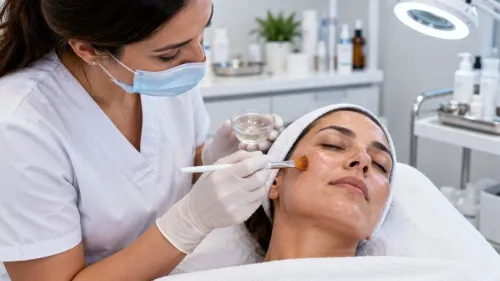
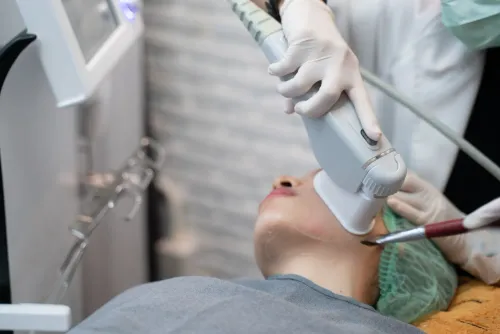
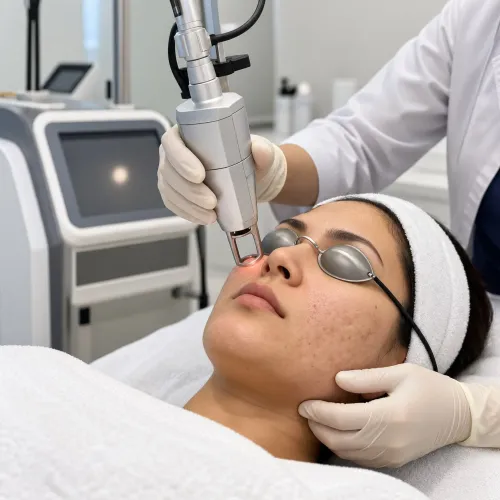
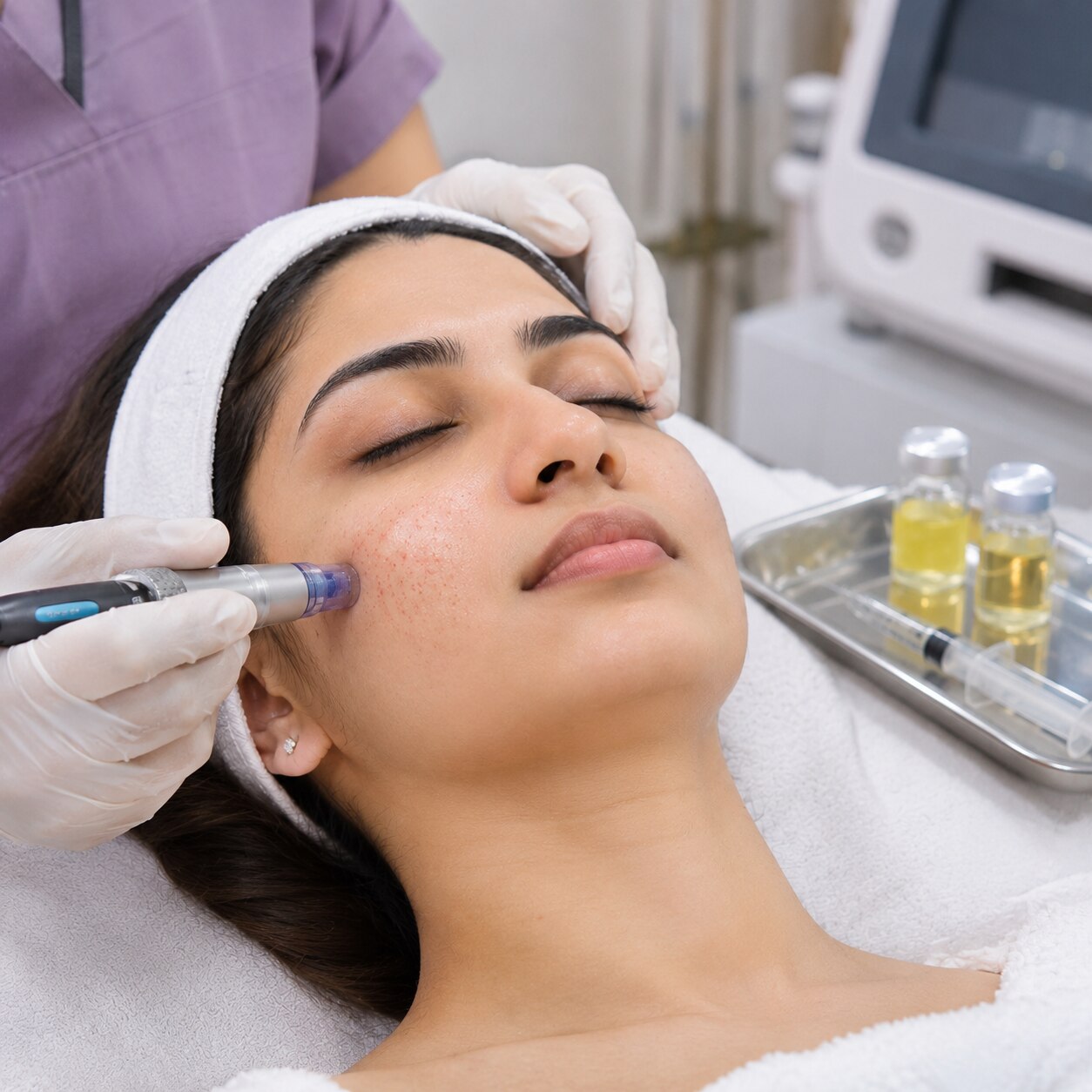
Microneedling or laser treatment creates temporary channels or removes part of the barrier, allowing topical exosomes to contact deeper tissue than intact skin permits. The procedure itself also triggers wound healing and collagen production, so an improved appearance does not show that the topical product added benefit.
| Route | What happens | Main limitation or risk |
|---|---|---|
| Topical exosomes after microneedling | Applied to a disrupted surface; penetration remains difficult to measure | Benefit may come from microneedling, and contaminated product can enter open channels |
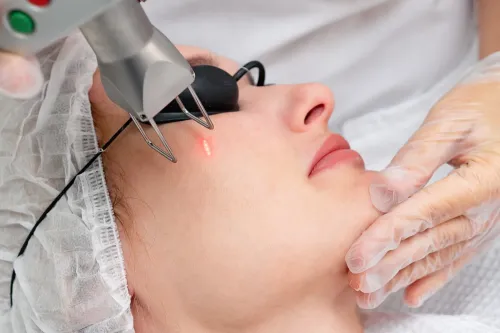
| Topical exosomes after laser treatment | Applied after laser-created injury; depth depends on the laser and treatment settings | Infection, prolonged redness, pigment change and scarring can follow the laser or product |
| Intradermal injection | Placed directly into the dermis at a stated depth and dose | Greater tissue exposure brings needle-related infection, bleeding, inflammation, nodules and uneven results |
Intradermal injection does not automatically produce a better or longer-lasting result. It bypasses the skin barrier, so an unapproved or poorly characterized product carries a more direct route to tissue exposure; the FDA has reported infections requiring hospitalisation after unapproved exosome products.
Before consenting, ask for:
- The exact product name, source material, ingredients, dose and injection depth, if applicable
- The identity of every accompanying procedure, including platelet-rich plasma, radiofrequency or laser treatment
- The sterile technique and single-use policy
- The written plan for infection, persistent redness, darkening, lightening or scarring
What does the evidence support for facial rejuvenation?
Reasonable targets are mild fine lines, uneven texture and dull skin, but the exosome facial rejuvenation evidence remains preliminary. Small human studies report visible improvement over several weeks or a few months, yet their differing source materials, application methods and outcome measures make results difficult to compare.
| Concern | What the evidence suggests | When another treatment makes more sense |
|---|---|---|
| Fine lines | Early studies suggest modest smoothing, but they rarely prove that exosomes caused lasting collagen remodeling | Choose botulinum toxin for expression lines or fractional laser for sun-related fine lines when those treatments fit the diagnosis |
| Uneven texture | Improvement has been reported after exosomes combined with microneedling or laser, but the procedure itself stimulates resurfacing and collagen production | Choose fractional laser, microneedling or a chemical peel when texture is the main concern and a better-established protocol is suitable |
| Dull skin | A short-term brightness or hydration change is plausible, but subjective ratings do not establish durable rejuvenation | Treat the cause with sunscreen, retinoids, pigment-directed care or a peel when pigmentation, dryness or photodamage drives the dull appearance |
A combined-treatment result does not show that the vesicles added meaningful benefit. Intact skin also limits topical delivery, so application without a barrier-disrupting procedure has an additional evidence problem.
Maintenance intervals, results beyond one year and the effects of repeated dosing remain poorly defined. If you need a predictable outcome for a specific concern, an established treatment with defined settings, follow-up and long-term safety data makes more sense than paying for an uncertain add-on.
What should you ask before consenting to treatment?
Ask for documents, not assurances, before you consent. Obtain the exact product name, source cells, composition, particle dose, administration route and depth, other procedures in the protocol, session count, storage temperature, expiry criteria and written exosome aftercare.
| Protocol feature | Better evidence | Warning sign |
|---|---|---|
| Product identity | Manufacturer, source, batch number and certificate of analysis | “Exosome serum” with no composition |
| Characterisation | Particle-count method, size distribution, positive and negative vesicle markers, relevant potency assay | No measured dose or potency data |
| Safety controls | Final-product sterility and endotoxin testing, controlled transport and storage records | Testing only the starting cell culture |
| Regulatory status | Written CDSCO position, licence or authorisation that specifically covers the product and intended aesthetic use | “CDSCO approved” without a document or licence number |
During an exosome treatment consultation, ask:
- Is the material human-, animal- or plant-derived, and what isolation method was used?
- Was the final vial tested for bacteria, fungi, endotoxin, residual reagents and unwanted proteins?
- Is this topical use after microneedling or laser, or an intradermal injection? Who performs it, and with what sterile technique?
- What is the plan for infection, prolonged redness, pigment change or scarring?
For the CDSCO exosome regulation India question, verify claims through official CDSCO channels rather than accepting a brochure. Dr Purva Nucleus Eye And Skin Clinic should be able to explain which part of its protocol is evidence-based and what alternative, such as a skin-quality treatment or PRP, offers a clearer rationale.
Pursue treatment only when the documentation, risks, costs and realistic duration of benefit justify the uncertainty.
Frequently asked questions
What is being called an exosome treatment?
The term usually refers to applying or injecting extracellular vesicles containing proteins, lipids and nucleic acids. “Exosome” specifically describes vesicles formed through a particular cellular pathway, which must be demonstrated.
How can you verify what is in the treatment vial?
Ask to see the vial and its label, including the product name, ingredients or source, batch number, expiry date and storage instructions. Request supporting product documentation before treatment.
Does the delivery method affect safety and results?
Yes. Topical application, microneedling and injection place the product in different skin layers and involve different risks, so ask which method is planned and why it suits your skin.
What does current evidence support for facial rejuvenation?
Evidence is limited and depends on the specific extracellular-vesicle product, preparation and delivery method. Do not treat marketing claims as proof of a predictable rejuvenation result.
What should you ask before consenting to exosome treatment?
Ask what the vial contains, how it was manufactured and stored, how it will be delivered, what evidence supports that product, what risks apply, and what alternatives are available.