Early laxity is not the same problem as heavy folds, major volume loss or a large amount of excess skin, so the right treatment depends on what has changed beneath the surface. By the end, you will be able to judge whether your pattern of laxity fits HIFU, what results and sensations to expect, and when another treatment is more appropriate.
Key takeaways
- HIFU suits early laxity, not heavy folds or substantial excess skin.
- Expect modest tightening and contour improvement, not a facelift-like lift.
- Compare HIFU with injectables, energy treatments and surgery before choosing.
- Ask who will treat you, which areas and depths, and what results are realistic.
What counts as mild facial or neck laxity?
Mild facial laxity means loose or crepey skin, early jowling, a softer jawline or mild neck laxity without heavy folds or substantial excess skin. HIFU is reasonable to discuss when you want a modest tightening or contour improvement, not a facelift-like lift.
A clinician assesses more than what you see in a photograph. They check skin elasticity and thickness, how far the tissue has descended, facial and neck anatomy, weight stability and your treatment goal.
Skin with little recoil, weight that is still changing or a primary concern about lost cheek or jawline volume may require a different plan.
| Finding | More consistent with mild laxity | Suggests another plan |
|---|---|---|
| Skin | Slight looseness with reasonable recoil | Very thin, severely sun-damaged or substantially excess skin |
| Jawline | Early jowling and reduced definition | Heavy jowls or marked tissue descent |
| Neck | Slight looseness without heavy folds | Prominent platysmal bands or a large neck fold |
| Under-chin area | Loose skin | Submental fat, a low hyoid or muscle-related fullness |
The consultation should separate loose skin from fat and structural anatomy that tightening cannot correct. Ask the practitioner to show which tissue is loose, which layer the device will target and how the proposed result fits your anatomy.
A realistic endpoint is a small improvement in firmness or contour, not guaranteed volume replacement, wrinkle removal or surgical lifting.
Where HIFU works—and what it cannot change
Treatment lines may be placed around the brow, lower face, jawline, submental area and neck, depending on the device and indication. Thin or poorly covered areas need caution; the practitioner must exclude zones identified in the device instructions and by your anatomy.
HIFU is an umbrella term. Microfocused ultrasound and high-intensity focused ultrasound devices differ in imaging, energy delivery, treatment depth and regulatory authorization, so evidence for one device does not automatically apply to another.
| Depth | Tissue target | Practical boundary |
|---|---|---|
| 1.5 mm | Superficial skin layers | Avoid excessive energy on thin skin |
| 3.0 mm | Deeper dermal or connective tissue layers | Placement depends on skin thickness |
| 4.5 mm | Deeper support-plane tissue | Requires adequate soft-tissue coverage and precise anatomy |
These approximate depths reach different layers, not interchangeable settings. Controlled thermal injury is intended to start wound healing and collagen remodeling; it does not remove loose skin immediately.
HIFU can tighten selected lax tissue, but it cannot replace lost fat or bone-supported volume, relax expression muscles, treat pigmentation, resurface sun damage or surgically remove a neck fold. Prominent submental fat, a low hyoid, heavy neck bands or substantial excess skin need separate assessment rather than being labelled simple laxity.
Excessive energy or an unsuitable treatment depth can increase pain, burns or unwanted loss of subcutaneous fat.
How HIFU compares with other ways to address laxity
Choose the treatment for the change you want, not for the word HIFU. The HIFU versus facelift decision is about scale: surgery suits marked jowls, heavy folds or pronounced platysmal banding because a facelift or neck lift removes excess skin and repositions deeper tissues. It also brings incisions, recovery and surgical risk.
| Option | Main target | Trade-offs |
|---|---|---|
| Surgical facelift or neck lift | Excess skin, deep folds, descended tissues and heavy neck bands | Largest structural change; incisions, recovery and surgical risks |
| HIFU or microfocused ultrasound | Selected tissue depths for modest tightening and contour improvement | Gradual, limited change; depth, energy and device evidence vary |
| Radiofrequency tightening | Heat delivered through radiofrequency energy | Different energy system; results from one device cannot be transferred automatically to another |
| Fillers | Lost volume and contour, such as a hollow cheek | Adds volume rather than tightening loose skin; carries injection-related risks |
| Biostimulatory injectables | Collagen stimulation over time | Gradual volume or firmness change; not interchangeable with skin tightening |
| Energy-based resurfacing | Texture, pigment and fine lines at the skin surface | Does not correct significant tissue descent |
Compare the proposed depth, energy, treatment area, expected magnitude of change, downtime, risks and follow-up plan. Ask which device is being used and why its evidence applies to your anatomy.
If your main concern is a hollow cheek, a double chin caused by fat, or etched surface damage, HIFU alone targets the wrong problem. A clinician should separate volume loss, submental fat and surface damage from laxity before recommending treatment.
What the appointment, sensation and recovery are like
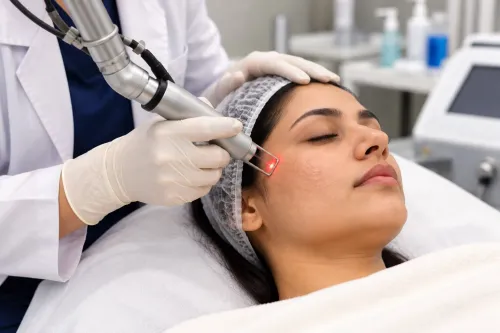
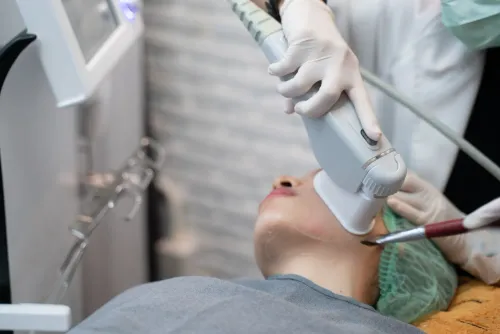
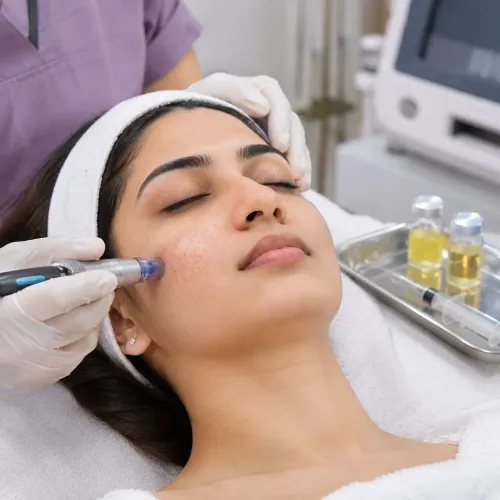
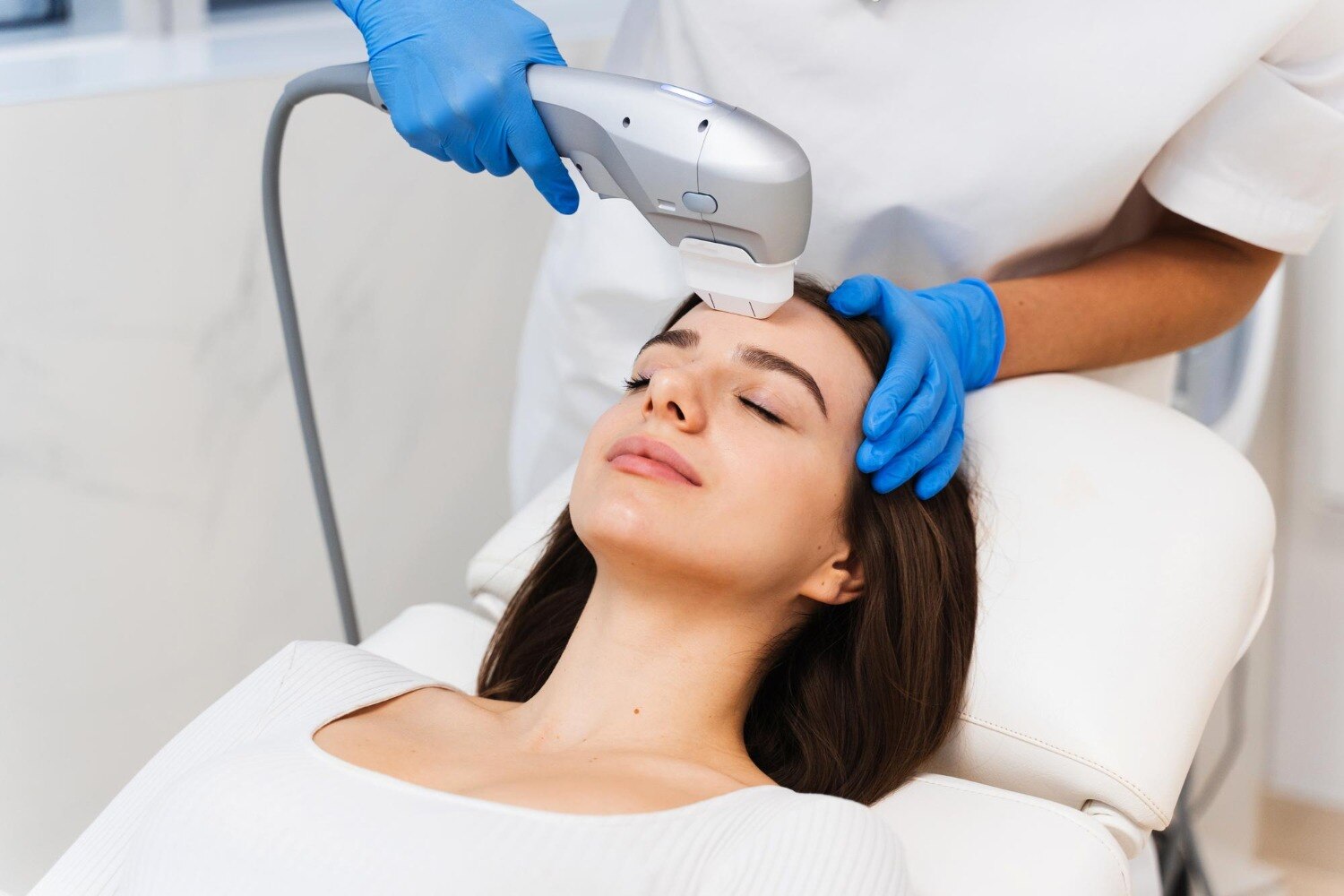
The HIFU treatment process usually includes consultation, skin preparation, anatomical mapping, ultrasound passes and a post-treatment check. Treatment time depends on the number of lines and facial or neck sites selected.
- During consultation, the clinician reviews prior surgery, scars, implants, fillers, threads and conditions that impair healing. Active infection, open wounds or significant inflammation require postponement. Treatment lines are marked around your anatomy, including vulnerable areas to avoid.
- After preparation, the handpiece delivers ultrasound energy at selected depths through the agreed areas. The practitioner completes several passes, checking coverage and your response between them.
- The clinician can pause, adjust settings and use comfort measures if needed. Device instructions also determine whether treatment is appropriate near implanted electronic or metallic devices.
HIFU discomfort varies by setting and location. Heat, prickling and brief sharp sensations are common; no clinic can guarantee a pain-free experience.
HIFU downtime is usually limited, but redness, swelling, tenderness, bruising, sensitivity or temporary numbness can occur. Report persistent numbness, weakness, severe pain or skin changes promptly.
The collagen remodeling timeline is delayed. Early tightening may be subtle, the main assessment commonly occurs at two to three months, and improvement can continue for several months. Treatment is often planned as one session; there is no universal retreatment schedule, and repeating too soon can add risk without proven proportional benefit.
When HIFU is the wrong choice—and how to vet the plan
HIFU is a poor fit for marked skin excess, pronounced jowls, heavy neck bands, major volume loss, very thin or severely sun-damaged skin, or an expectation of an immediate dramatic lift. These are important HIFU contraindications to discuss, not problems a higher energy setting can solve.
Defer treatment over an active skin infection, open wound or significant inflammatory disease. Disclose every filler, thread, implant and previous energy procedure, including its material, location, depth and age; evidence for treatment near superficial filler or threads remains limited, and sequencing can affect the result.
Ask during your HIFU consultation:
- Which device will you use, and what indication is it authorised for?
- Will you use 1.5-, 3.0- or 4.5-mm depths, and which tissue layer does each target?
- How will you map facial nerve anatomy and protect thinly covered areas?
- Who will manage delayed numbness, weakness, burns, prolonged pain or contour change?
- What written endpoint and follow-up date will you provide?
HIFU complications include nerve irritation, bruising, burns and unwanted fat loss. A consultation at Dr Purva Nucleus Eye And Skin Clinic should compare the plan with alternatives before treatment.
| Option | Better fit when | Main trade-off |
|---|---|---|
| Surgery | Excess skin, heavy folds or banding | Incisions and recovery |
| Injectables | Lost volume or expression lines | Do not remove loose skin |
| Radiofrequency | Another energy-based tightening approach | Different device evidence |
| No treatment | The expected change is too small | No procedure risk |
Frequently asked questions
What counts as mild facial or neck laxity?
Mild laxity includes loose or crepey skin, early jowling, a softer jawline or mild neck laxity without heavy folds or substantial excess skin.
Where does HIFU work, and what cannot it change?
HIFU may provide modest tightening and contour improvement, but it cannot create a facelift-like lift or remove substantial excess skin.
How does HIFU compare with other ways to address laxity?
The right comparison depends on whether your main concern is skin looseness, volume loss, excess skin or a need for a stronger lift; alternatives differ in downtime, risk and expected change.
What are the appointment, sensation and recovery like?
A consultation determines whether HIFU fits your anatomy and goals. Ask the clinician to explain the treatment sensation, recovery period and expected degree of improvement before proceeding.
When is HIFU the wrong choice, and how should you vet the plan?
HIFU is a poor fit when you expect a facelift-like result or have substantial excess skin. Vet the plan by asking about the clinician’s qualifications, treatment areas, device and realistic outcome.