Depressed acne scars, rough texture and enlarged-looking pores do not all respond to the same procedure. By comparing scar shape, skin type, active acne, downtime and treatment risks, you can identify when fractional CO2 resurfacing is a sensible option and when another or combined treatment fits better.
Key takeaways
- Rolling and shallow boxcar scars respond better than deep ice-pick scars.
- Deep scars may need subcision, punch surgery, or fillers before laser resurfacing.
- Expect redness, swelling, peeling, sun sensitivity, and several weeks of aftercare.
- Ask about settings, skin-tone risks, downtime, alternatives, and the clinician’s scar-treatment experience.
What fractional CO2 laser changes beneath the skin
Fractional CO2 laser improves depressed scars by creating microscopic columns of controlled thermal injury through the epidermis and into the dermis, while leaving untreated skin between them. This triggers wound healing, collagen remodelling and resurfacing: new collagen can soften sharp edges, reduce shadowing in shallow depressions and make rough texture more even.
It does not physically lift tethered skin or fill a deep hole.
- Shallow-to-moderate rolling scars may look smoother, but tethering often needs subcision before or alongside resurfacing.
- Shallow boxcar scars are a stronger match for ablative laser resurfacing; deep, sharply edged boxcars may need focal treatment or combination treatment.
- Ice-pick scars usually respond poorly to fractional CO2 laser alone and may need TCA CROSS or punch surgery.
Expect improvement, not erasure. Fractional treatment leaves untreated skin between treatment columns, which reduces healing time compared with fully ablative resurfacing, but each session produces a less dramatic change and a course may require multiple sessions. Redness, swelling, heat, crusting or oozing can last several days, with redness sometimes persisting longer.
Collagen changes continue for weeks to months, so judging texture after only a few days or weeks can underestimate the result. Scars may become less noticeable without returning the skin to its pre-acne appearance.
Which acne scars are suitable—and which need another approach
Scar shape matters more than scar count. Fractional CO2 laser is best suited to broad textural improvement from shallow-to-moderate rolling scars and shallow boxcar scars. It can soften irregular edges and stimulate collagen remodelling, but it cannot release a tether or fill a deep cavity.
| Scar morphology | Better-matched plan | Why CO2 alone may fall short |
|---|---|---|
| Rolling scars | Subcision, followed by fractional CO2 when texture remains uneven | Fibrous bands pull the skin downward; resurfacing does not release them |
| Shallow boxcar scars | Fractional CO2 laser | Broad, shallow depressions often respond to surface remodelling |
| Deep boxcar scars | Punch elevation, punch excision or filler, then resurfacing if needed | Depth and sharply defined walls require a focal correction |
| Ice-pick scars | TCA CROSS or punch surgery, with fractional CO2 for surrounding texture | A narrow, deep tract receives limited benefit from diffuse laser columns |
A combination plan matches mixed scars better than repeatedly increasing laser intensity: subcision addresses tethered rolling scars, a focal procedure targets ice-pick scars, and fractional CO2 treats the remaining broad texture. Deep boxcar scars may also need focal correction before resurfacing.
Postpone resurfacing while inflammatory acne is uncontrolled, because new lesions complicate healing and create additional scars. Raised keloid scars, pigment-dominant marks, active infection, previous abnormal laser reactions, and high-risk healing history require a different plan or specialist review. A history of recurrent cold sores also matters; ask about antiviral prevention before ablative treatment.
How clinicians compare CO2 laser with other scar treatments
Choose by scar mechanics and the problem you want to change, not by selecting the strongest laser. Fractional CO2 suits broad shallow-to-moderate rolling and sharply edged boxcar scars when uneven texture is the main concern; it cannot release tethering or reliably fill deep, narrow pits.
| Option | Best match | Main limitation |
|---|---|---|
| Fractional CO2 laser | Broad texture, shallow boxcar scars, and some rolling scars | Requires healing time and may need multiple sessions; does not correct tethering |
| Non-ablative laser toning | Brown marks, redness, or mild tone unevenness without significant depressions | Does little for scar depth or pronounced texture |
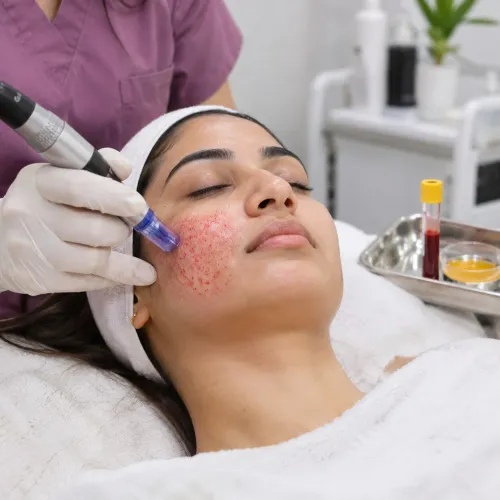
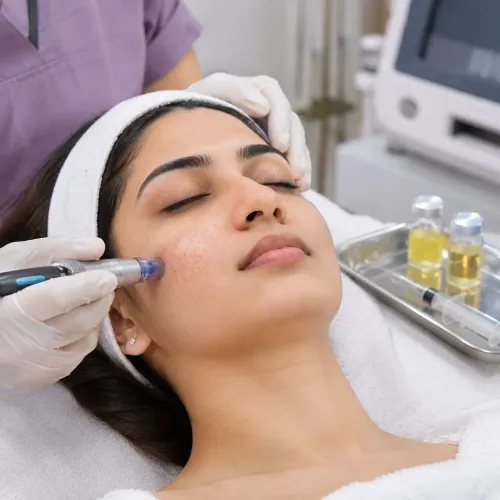
| Microneedling | Mild-to-moderate rolling scars and modest texture change with shorter recovery | Usually less powerful for sharply defined or deeper scars |
| Chemical peels | Surface roughness or pigment, including selected superficial scars | Cannot lift deep depressions; excessive strength raises irritation and pigment risk |
| Subcision for tethered scars | Rolling scars fixed to deeper tissue | Does not resurface the skin or treat narrow pits |
| Punch surgery | Deep ice-pick or sharply defined boxcar scars | Treats individual scars, leaving small surgical marks before blending |
| Fillers | Depressed scars with a volume deficit, especially selected rolling scars | Temporary or semi-permanent volume correction does not rebuild surface texture |
A staged combination plan often fits better: release tethered scars with subcision, use focal treatment or punch surgery for deep ice-pick scars, then resurface remaining broad texture with fractional CO2. Increasing laser intensity alone cannot solve a scar anchored below the skin.
What treatment and recovery actually involve
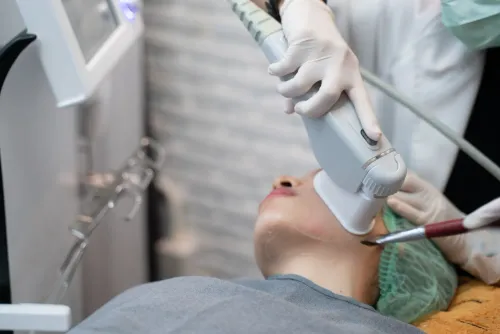
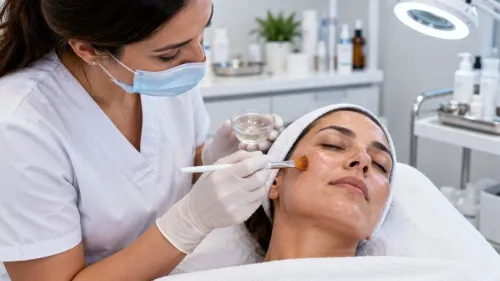
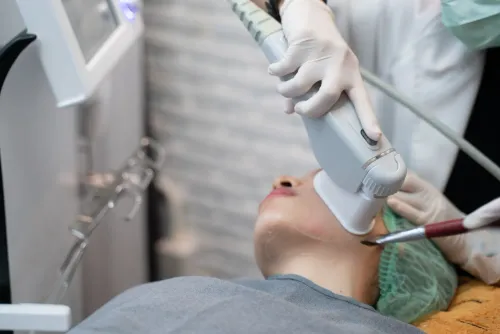
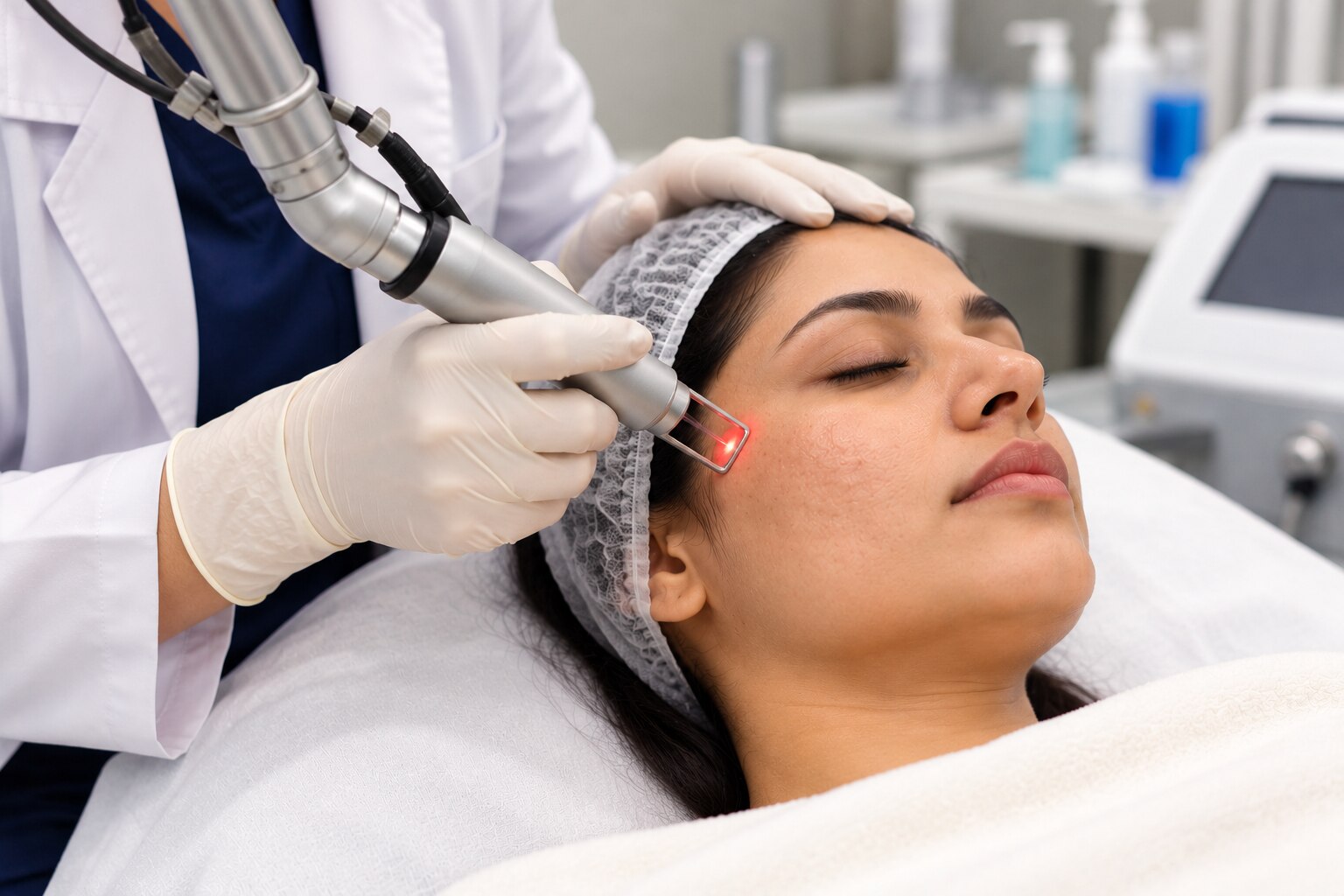
Fractional CO2 treatment creates microscopic columns of ablative heat while leaving untreated skin between them. This preserved skin helps the surface repair faster than a fully treated field. A topical anaesthetic is applied beforehand; during treatment, eye protection shields you while the clinician makes controlled laser passes and cooling reduces heat and discomfort.
| Approach | What happens | Recovery and trade-off |
|---|---|---|
| Fractional ablative CO2 | Treats microscopic columns, leaving bridges of untreated skin | Several days of redness, swelling, heat, crusting or oozing; multiple sessions may be needed |
| Fully ablative CO2 | Treats the entire surface rather than scattered columns | Longer healing, greater complication risk and potentially a stronger change per session |
After fractional treatment, follow the clinic’s wound-care instructions exactly. A petrolatum wound care product may protect the treated surface while it closes; do not pick crusts, scrub the area or apply unapproved acids and retinoids. Arrange time away from work or public-facing commitments for the early redness and swelling.
Residual erythema can last considerably longer than the initial crusting. Avoid sun exposure during healing and use the specific sunscreen instructions provided, because ultraviolet exposure can worsen lingering discoloration. Recently tanned or sunburned skin also raises pigmentary risk.
The visible change is not the final result. The initial wound-healing response is followed by collagen remodeling over weeks to months, so judging texture after only a few days—or even a few weeks—can misrepresent the outcome.
What to check before committing to a treatment plan
A safe plan starts by deciding whether your skin can heal predictably, not by choosing the highest energy. Review active inflammatory acne, infection, immunosuppression, poor wound healing, prior abnormal laser reactions, isotretinoin use, and any keloid history; these factors can postpone, modify, or rule out resurfacing.
| Factor | What to review | Why it matters |
|---|---|---|
| Laser plan | Fluence in J/cm², pulse duration, treatment density, number of passes, and fractional versus fully ablative coverage | Higher energy and denser coverage increase delayed healing, prolonged erythema, infection and scarring risk |
| Pigment risk | Your phototype, tanning tendency, previous post-inflammatory hyperpigmentation or hypopigmentation, and planned photoprotection | Conservative settings and pigment management matter because colour changes can persist for months |
| Scar pattern | Whether tethering, deep pits or raised scars remain after resurfacing | Repeatedly increasing intensity will not release tethered rolling scars or replace focal treatment for ice-pick scars |
A consultation at Dr Purva Nucleus Eye And Skin Clinic should leave you with specific answers to these questions:
- Should you postpone treatment until inflammatory acne or an infection is controlled?
- What antiviral schedule is planned for recurrent cold sores, and is herpes simplex prophylaxis needed?
- What sunscreen, hat use and sun-avoidance rules make up your photoprotection plan?
- How will you manage pigment before or after treatment?
- What signs of bacterial infection, delayed healing, acne or milia flares require review?
- How many sessions and what interval are planned, and when will you reassess rather than intensify treatment?
Frequently asked questions
What does fractional CO2 laser change beneath the skin?
It creates microscopic columns of controlled thermal injury through the epidermis and dermis, stimulating wound healing and collagen remodelling while leaving untreated skin between columns.
Which acne scars are suitable for fractional CO2 laser?
Shallow rolling scars and selected boxcar scars often suit resurfacing. Deep ice-pick scars, tethered scars, raised scars, and active acne need another approach or combination treatment.
How do clinicians compare CO2 laser with other scar treatments?
They compare scar type, depth, skin tone, downtime, treatment goals, and risk of pigment changes against options such as subcision, microneedling, chemical reconstruction, punch techniques, fillers, and non-ablative lasers.
What does fractional CO2 laser treatment and recovery involve?
A clinician cleans and numbs the skin, applies calibrated laser passes, then gives wound-care and sun-protection instructions. Redness, swelling, peeling, and sensitivity continue during recovery.
What should you check before committing to treatment?
Confirm the diagnosis, proposed settings, number of sessions, expected downtime, pigment-change risk, aftercare, alternatives, total costs, and the clinician’s experience treating your scar pattern and skin tone.