Hair loss has several causes, and PRP is most useful when the remaining follicles are still viable and the diagnosis is clear. By the end, you will know how clinicians assess suitability, what the treatment can realistically change, how results are measured and when another hair-loss treatment is the better choice.
Key takeaways
- PRP is best studied for androgenetic alopecia, or pattern hair loss.
- Identify illness, deficiency, medication or inflammation before choosing PRP.
- Track progress with standardised photographs, hair counts and density assessments.
- Expect gradual changes rather than immediate thickening after treatment.
Which type of hair loss is PRP designed to treat?
PRP for androgenetic alopecia, also called pattern hair loss, is the best-studied use of this treatment. A consultation must establish the cause before injections because diffuse shedding from illness, nutritional deficiency, medication or inflammation needs different care.
The clinician combines:
- Scalp examination for scaling, redness, pustules, pain, smooth shiny areas or loss of follicle openings
- Hair-pull test assessment of hair shedding to judge whether excessive numbers of hairs release easily
- Trichoscopy for hair loss to compare shaft thickness, follicle openings, broken hairs and miniaturization
- Medical history covering recent fever, surgery, childbirth, weight loss, stress, family pattern, illnesses and medicines
- Targeted tests when indicated, such as ferritin and iron studies, thyroid-stimulating hormone, complete blood count and tests for other blood abnormalities or contributing conditions
| Condition | What it means | PRP decision |
|---|---|---|
| Androgenetic alopecia | Progressive, hormone-sensitive miniaturization in a recognisable pattern | Best-studied indication; consider after diagnosis |
| Scarring alopecia | Inflammation destroys follicle structures and leaves scar tissue | Treat the inflammatory disease first |
| Active scalp infection | Infection causes inflammation, scaling, pustules or tenderness | Treat infection before PRP |
| Alopecia areata | Immune attack produces smooth patches or sudden loss | Requires specific diagnosis and treatment |
| Sudden unexplained shedding | Rapid diffuse loss can reflect telogen effluvium, deficiency, illness or medication effects | Investigate the cause first |
PRP cannot reliably regrow hair from scarred or permanently destroyed follicles. Do not label sudden shedding as pattern hair loss without examination and, when needed, targeted testing.
What happens during a PRP hair treatment appointment?
A PRP hair treatment procedure usually takes about 45–60 minutes. The exact time varies with preparation method, the number of injection sites and whether local anaesthesia is used.
1. The clinician reviews your medical history, current medicines and previous hair-loss treatment. Screening covers platelet disorders, major blood abnormalities, anticoagulant or antiplatelet use, active scalp infection and uncontrolled systemic disease. Do not stop prescribed blood-thinning medicine without advice from the clinician who prescribed it.
2. A small blood sample is collected from your arm. PRP centrifugation then separates and concentrates platelets; the clinic may use one centrifugation step, two steps or another preparation method. Recipes differ in platelet concentration, leukocyte content and injected volume.
3. The scalp is cleansed and marked over areas containing miniaturized follicles. Local anaesthesia for PRP hair treatment may involve a numbing cream, local injection or no anaesthesia, depending on sensitivity and injection count.
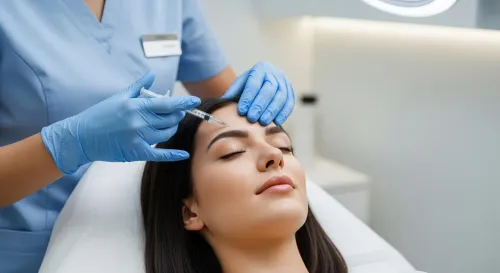
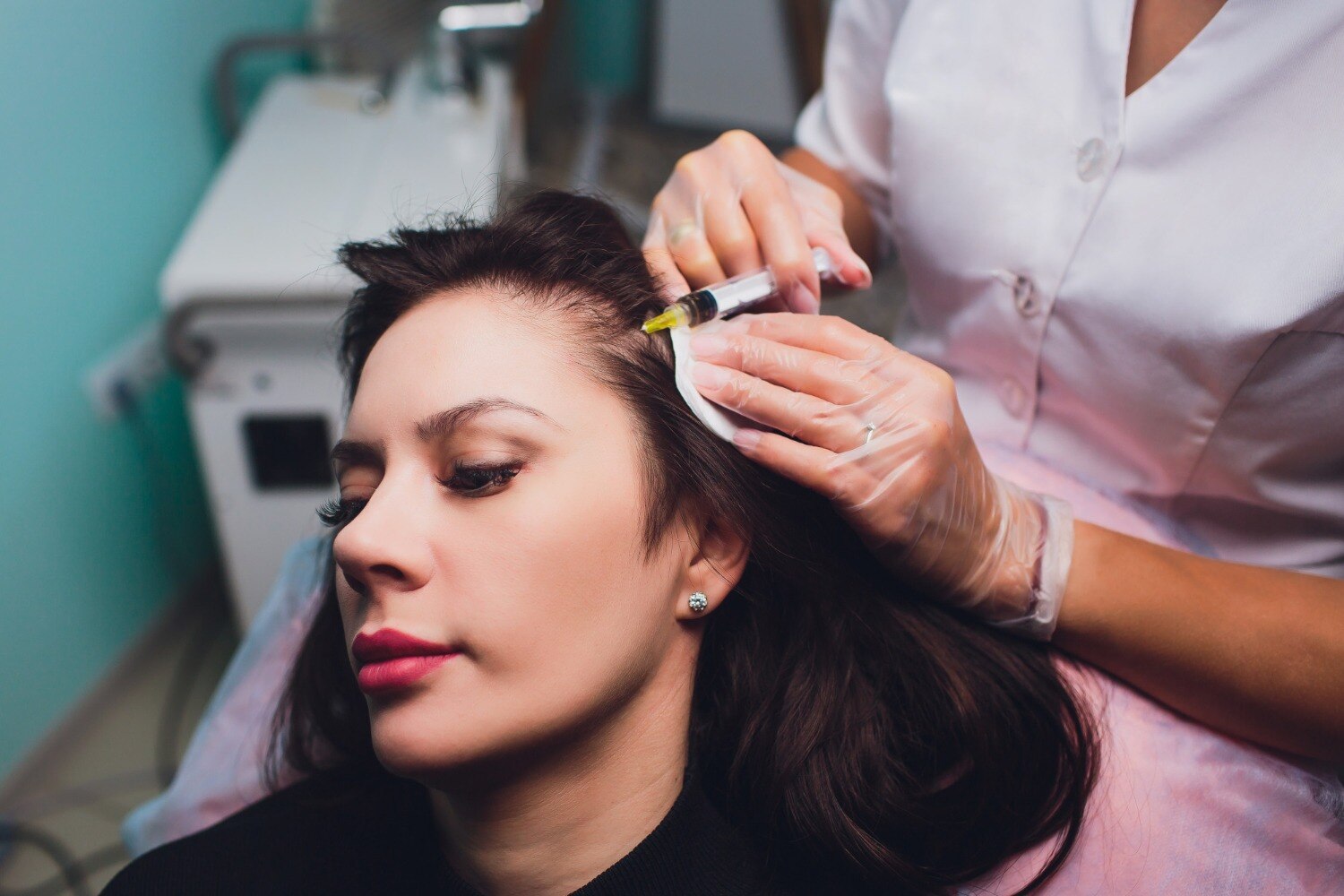
4. The prepared plasma is delivered through scalp injections for hair loss, placed across the thinning regions rather than into randomly selected scalp. The clinician adjusts spacing and depth to cover the treatment area.
5. You receive clinic-specific aftercare instructions, such as when to wash your hair, which products to avoid and when to resume exercise or topical medicines. Tenderness, redness, swelling, bruising or headache can follow and usually settle over several days; worsening pain, spreading redness or fever needs medical review.
How can PRP affect hair follicles and visible density?
PRP growth factors are platelet-released signaling proteins, not guaranteed regrowth signals. PDGF, VEGF, EGF and IGF-1 may influence follicular-cell activity, support blood-vessel formation and encourage follicles to shift from a resting phase into a growing phase. These proposed mechanisms explain the treatment’s rationale, but they do not prove that every preparation will produce visible improvement.
The four outcomes people commonly confuse are:
- Reducing shedding: PRP may help fewer viable follicles remain in a prolonged resting phase.
- Increasing hair shaft thickness versus density: a miniaturized follicle may produce a thicker existing shaft, without increasing follicle numbers.
- Improving visible density: thicker shafts and less shedding can make the scalp look less exposed.
- Creating new follicles: PRP is not expected to create follicles that no longer exist.
PRP supports viable follicles; it cannot create a donor supply, replace transplanted follicles or guarantee restoration of your original hairline. Hair follicle miniaturization in pattern hair loss remains driven by androgen sensitivity, so PRP does not replace finasteride, dutasteride, minoxidil or another evidence-based maintenance treatment when appropriate.
PRP and minoxidil may be discussed together because they act through different proposed mechanisms, but neither guarantees a particular density outcome.
When should you expect changes, and how are they measured?
Three PRP hair treatment sessions spaced about one month apart are a commonly discussed starting course. Studies, however, have used one to six sessions, and maintenance PRP for hair loss every few months is a clinical pattern, not a universally validated schedule.
1. Assess early change at about three months. Stimulated follicles must enter a visible growth phase, so PRP results timeline cannot be judged immediately after an injection. Temporary shedding can continue or fluctuate before you notice slower loss, thicker existing shafts or gradual improvement in visible density.
2. Compare standardized hair density before and after photographs. Take each image from the same scalp location, angle and lighting, with consistent hair length and styling. A different parting, longer hair, stronger light or temporary shedding can make density look better or worse without reflecting a true follicle change.
3. Add dermoscopic or computerized hair counts when available. These measurements can track shaft diameter, follicle numbers and miniaturized hairs more consistently than memory or casual mirror checks. Ask when the same areas will be re-examined and whether the clinic records identical settings.
Expect a gradual result rather than a sudden thickening effect. A fuller appearance does not prove that new follicles formed; improvement usually reflects reduced shedding or thicker growth from viable follicles. Full benefit and durability remain uncertain, especially because many studies follow patients for only three to twelve months.
What does the evidence support when choosing PRP?
Studies often report greater hair density or hair-shaft thickness after PRP than at baseline. Some randomized trials also find better results with PRP versus placebo or saline, but small samples, short follow-up, inconsistent controls and different measurement methods limit certainty.
A practical reading of the PRP hair loss evidence looks like this:
| Finding | What it supports | What it does not prove |
|---|---|---|
| Greater density or shaft thickness than baseline | Existing follicles may respond | Guaranteed regrowth or restored hairline |
| Better results than saline or placebo | PRP may have a treatment effect | A standard result for every patient |
| Improvement with combined therapy | Combination treatment may help | That PRP itself outperforms optimized medical therapy |
PRP protocol variation makes clinic-to-clinic comparisons unreliable. Preparations differ in platelet concentration, leukocyte content, activators, injection volume, site spacing and centrifugation steps, including one-step versus two-step processing. A result from one protocol cannot automatically predict your result elsewhere.
Response is not guaranteed, and long-term durability remains uncertain because many studies follow patients briefly. Ask how improvement will be measured and whether the plan includes medical therapy, rather than judging success from a single photograph.
At Dr Purva Nucleus Eye And Skin Clinic, a doctor consultation for hair loss treatment can help compare PRP with medical therapy, combination treatment or referral for another diagnosis. That matters when shedding is sudden, diffuse or unexplained: not every form of hair loss is a PRP case.
Related services
Cosmetic Procedures Platelet rich plasma therapy - is a treatment where in we use the patient’s blood to prepare a growth factor concentrate. View service → |
Cosmetic Procedures Platelet-Rich Plasma (PRP) therapy is a procedure that uses components of your own blood to stimulate hair growth . View service → |
Frequently asked questions
Which type of hair loss is PRP designed to treat?
PRP is best studied for androgenetic alopecia, also called pattern hair loss. A consultation must rule out illness, nutritional deficiency, medication effects and scalp inflammation before injections.
What happens during a PRP hair treatment appointment?
The clinician assesses your scalp and hair loss, collects a blood sample, prepares platelet-rich plasma and injects it into selected scalp areas.
How can PRP affect hair follicles and visible density?
PRP is intended to support affected hair follicles, which can improve the appearance of hair density over time. It does not create instant thickening.
When should you expect changes, and how are they measured?
Changes develop gradually and are assessed through consistent scalp photographs, hair-density comparisons and clinical examination at follow-up visits.
What does the evidence support when choosing PRP?
The strongest evidence supports PRP as a treatment option for androgenetic alopecia. Your diagnosis, treatment plan and progress measurements should guide the decision.