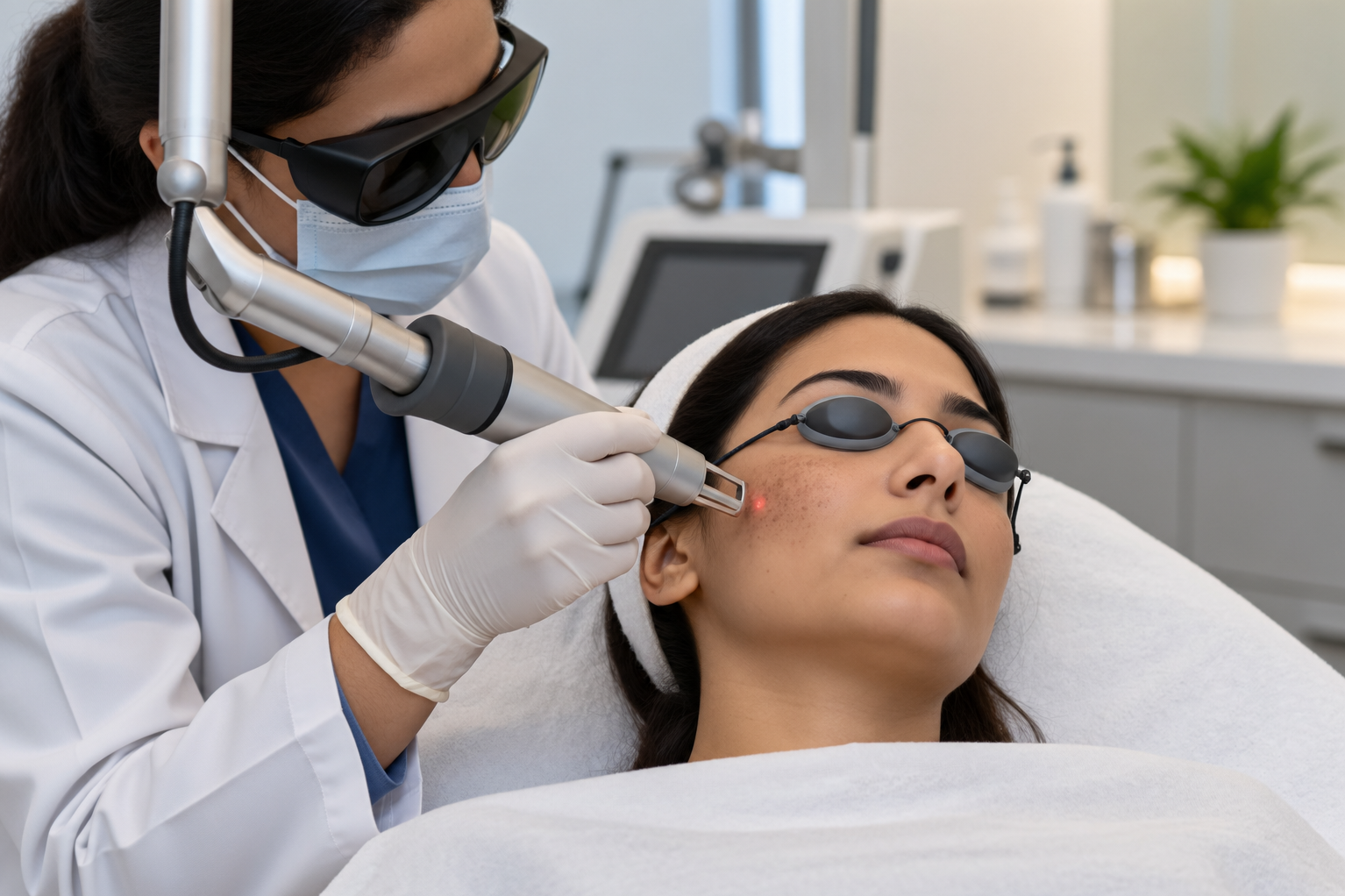
Laser treatments are frequently associated with pigmentation removal, but pigmentation is a broad category rather than a single condition. Freckles, tattoos, sun-related spots, post-inflammatory marks, and melasma-like pigmentation do not behave identically. Q switch laser technology can have a role in selected pigment-related concerns, but appropriate diagnosis and patient selection are essential.
For people in Bandra, Maharashtra, considering laser treatment, understanding these differences can help them choose care more carefully.
Understand What the Laser Targets
Q-switched lasers deliver energy in very short pulses and are used in dermatology for selected pigment-related applications.
The wavelength and treatment parameters influence which pigment or target is addressed.
This means that simply asking for a Q switch session without first identifying the condition is not an ideal approach.
Make Sure the Pigmentation Is Diagnosed
Brown marks on the face can have different causes.
Before recommending Q switch laser treatment, Dr. Purva may assess the location, depth, distribution, duration, previous treatments, sun exposure, and other clinical characteristics of the pigmentation.
Some conditions may respond differently from others, while certain pigmentation problems may require combination management.
Ask About Indian Skin Considerations
Laser treatment in darker skin tones requires careful parameter selection because excessive inflammation can potentially contribute to post-inflammatory pigmentation.
Patients should ask about expected temporary reactions and what precautions are required before and after treatment.
A conservative, diagnosis-led approach may be more appropriate than aggressive treatment intended to produce rapid visible change.
Check Your Treatment Readiness
Before scheduling a laser procedure, inform the dermatologist about:
- Recent tanning
- Current medications
- Active skin infections
- Pregnancy where relevant
- History of abnormal scarring
- Previous laser procedures
- Current retinoids or exfoliating products
- Recent cosmetic procedures
These factors can influence treatment planning.
Understand the Importance of Aftercare
After laser treatment, the skin may temporarily appear red or sensitive depending on the indication and settings used.
Sun protection becomes particularly important.
Patients should follow the prescribed skin-care routine rather than adding strong exfoliants or home remedies during recovery.
Pigmentation management often requires patience because the condition may improve gradually and recurrence can occur depending on the underlying cause.
Evaluate the Provider Beyond the Machine
The presence of an advanced laser device does not by itself ensure appropriate treatment.
Provider selection should include consideration of dermatological assessment, understanding of different pigmentation disorders, laser experience, skin-type evaluation, realistic counselling, and appropriate follow-up.
Nucleus Eye And Skin Clinic can assess whether laser treatment is suitable for the specific pigment concern rather than assuming that every dark mark should be treated with the same device.
A Q switch laser can be useful when the indication is appropriate. The safest path is to begin with an accurate diagnosis, understand expected outcomes, discuss the possibility of multiple sessions, and follow careful sun protection and aftercare throughout the treatment process.
Keywords