The most important question is not whether Botox reduces wrinkles, but which lines are driven by facial movement and whether weakening that movement suits your face. By the end, you will know how to compare Botox with other treatments, what a safe consultation examines, what treatment and recovery involve, and how to judge results without expecting a frozen expression.
Key takeaways
- Botox best treats forehead lines, frown lines and crow’s-feet caused by muscle movement.
- Choose resurfacing or filler treatments when wrinkles remain visible at rest.
- A consultation should review your goals, medicines, medical history and facial muscle movement.
- Avoid strenuous exercise and pressure on treated areas immediately after injections.
Which facial lines respond best to Botox?
Botox responds best to dynamic wrinkles—lines created or deepened when facial muscles contract. The main targets are horizontal forehead lines, glabellar lines between the eyebrows and crow’s-feet at the outer eyes. Relaxing selected muscles reduces the repeated folding that makes these lines more noticeable.
Test the difference in a mirror:
| Line | What to do | What it suggests |
|---|---|---|
| Forehead lines | Raise your eyebrows, then relax | Deepening with movement suggests dynamic lines; persistence at rest suggests etched-in damage |
| Glabellar lines | Frown, then relax | Movement-related creases usually respond better than fixed grooves |
| Crow’s-feet | Smile or squint, then relax | Expression-driven lines are more suitable for crow’s-feet Botox treatment |
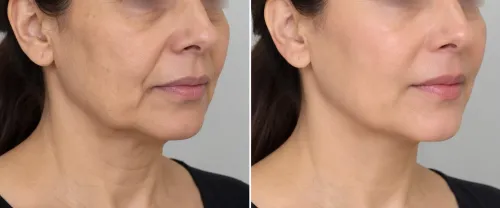
Botox does not replace lost volume, tighten lax skin, repair sun damage or erase every wrinkle visible at rest. A deep crease caused by volume loss, loose skin or photodamage may improve only partly, so expectations depend on the wrinkle’s cause.
Approved indications and treatment areas vary by botulinum toxin product and country. In the United States, approved adult areas include forehead lines, glabellar lines and lateral canthal lines for certain products; injections elsewhere can be off-label. Ask which product, indication and treatment area apply to you.
When Botox is the wrong tool: comparing other wrinkle treatments
A line caused by muscle contraction needs a different answer from a hollow, loose or sun-damaged surface. Botox vs dermal fillers is not a choice between interchangeable products: toxin reduces selected muscle movement, while fillers add volume or structure.
| Option | Best suited to | Poor match when |
|---|---|---|
| Botox | Dynamic forehead, frown and crow’s-feet lines | The main problem is substantial volume loss, marked laxity or deep photodamage |
| Dermal fillers | Hollows, folds and lost facial structure | The line is purely expression-driven, especially a forehead or frown line |
| Skin boosters | Hydration, elasticity and overall skin quality | You need muscle relaxation, major lifting or replacement of lost volume |
| Chemical peels | Selected surface roughness, fine lines and pigmentation | The concern is deep muscle activity, substantial volume loss or marked laxity |
| Laser toning | Certain pigment concerns and uneven tone | The line is caused by muscle contraction, laxity or depleted volume |
| Microneedling | Texture, mild photodamage and shallow acne scars | You need structural filling, treatment of marked laxity or relaxation of a strong muscle |
Fillers cannot substitute for reducing muscle movement, and adding volume to a movement-driven forehead line can produce an unnatural result. Skin boosters, chemical peels, laser toning and microneedling also improve skin quality rather than directly stopping repeated contraction.
Deep photodamage, etched lines or lax skin may need a different or combined approach. Staged treatment requires a diagnosis of the line’s cause, not a menu-based selection of procedures. A clinician should decide whether one treatment fits, or whether combining approaches creates more benefit and risk than either alone.
What should a consultation assess before injection?
A proper Botox consultation starts with an examination, not a decision based only on photographs. The qualified injector observes your face at rest, then asks you to frown, raise your eyebrows, smile and squint. These movements reveal facial movement, muscle strength, brow position, eyelid heaviness, skin laxity and existing asymmetry.
1. Discuss your preferred degree of movement. Conservative treatment can preserve expression but leave more lines; stronger weakening can look unnatural. The injector should also review previous toxin injections, eyelid surgery or other eyelid treatments, and arrange follow-up for asymmetry that appears after the effect develops.
2. Assess the frontalis against the muscles that pull the brows downward. Weakening the frontalis too much, injecting too low on the forehead, or treating someone who relies on this muscle to keep the eyes open can create a heavy upper face.
Low brows, hooded or heavy eyelids and prior eyelid surgery increase brow or eyelid ptosis risk.
3. Disclose myasthenia gravis, Lambert-Eaton syndrome, swallowing or breathing problems, pregnancy and breastfeeding. Report infection at the proposed injection site and all medicines that affect neuromuscular transmission or bleeding.
A doctor-led Botox consultation at Dr Purva Nucleus Eye And Skin Clinic should use this information to decide whether treatment is appropriate, not simply select injection points from a photograph.
Related service
Botox Botox (Botulinum toxin type A) is a non-surgical injectable treatment used to temporarily reduce fine lines and wrinkles caused by facial expressions... View service → |
What happens during treatment, and when can you resume normal activities?
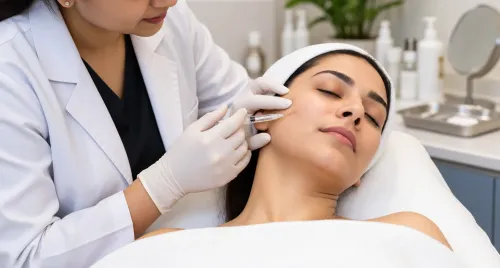
A Botox appointment begins with a review of the treatment plan, including the areas being treated and the degree of movement you want to retain. The appointment length depends on the number of areas and the assessment required.
- The clinician cleanses your skin and may mark the face while you relax and make expressions.
- They identify the injection sites by assessing the muscles involved in frowning, raising the eyebrows or smiling.
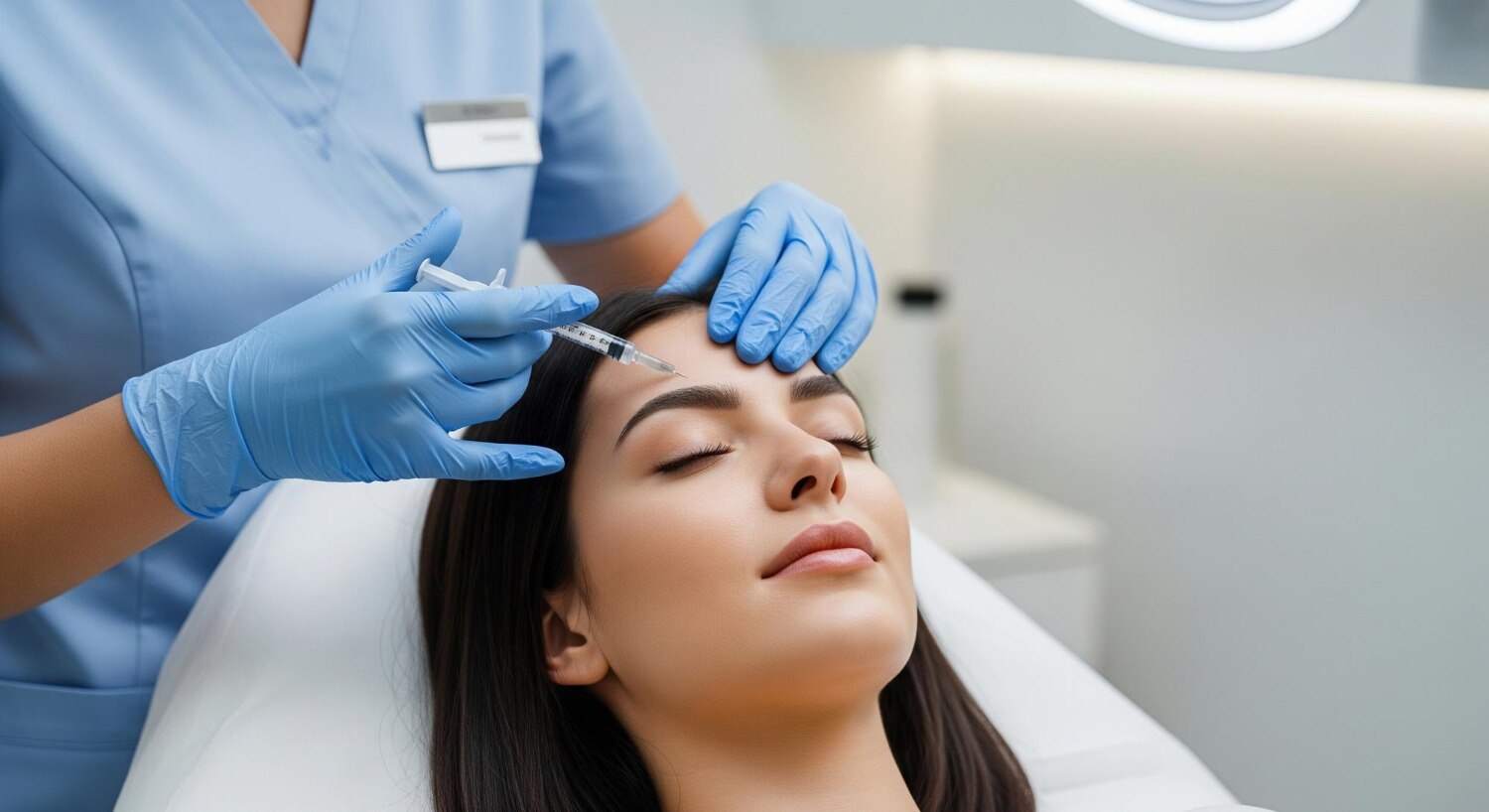
- They administer several small injections into selected muscles using a fine needle.
- You may feel a brief needle pinch, pressure or stinging at each site.
Common Botox side effects include temporary redness, tenderness, headache and bruising. Facial asymmetry, brow or eyelid drooping, or an unexpected change in expression can appear as the effect develops and may need review rather than immediate retreatment.
For Botox aftercare, follow your injector’s specific instructions and avoid rubbing or pressing the treated areas. Ask when you can exercise, apply makeup, or resume other normal activities; advice varies with the treatment plan and injection sites.
Postpone treatment if the intended injection area has an infection. Do not proceed if you have a known hypersensitivity to the formulation or any of its ingredients.
Seek urgent medical attention for generalized weakness, double vision, difficulty swallowing, difficulty speaking or breathing problems. These symptoms can indicate toxin effects extending beyond the treated muscles.
Frequently asked questions
Which facial lines respond best to Botox?
Botox responds best to dynamic wrinkles caused or deepened by muscle contraction, including forehead lines, glabellar lines and crow’s-feet.
When is Botox the wrong tool for wrinkles?
Botox is the wrong tool when lines are caused mainly by lost skin volume, sun damage, surface texture or sagging; fillers, resurfacing or other treatments may fit those concerns better.
What should a consultation assess before Botox injections?
The consultation should assess your treatment goals, facial expressions, muscle movement, skin condition, medical history, medicines and risk factors.
What happens during Botox treatment, and when can you resume normal activities?
A clinician cleans the skin, marks injection points and delivers small injections into selected muscles. Follow the clinic’s aftercare instructions before resuming exercise or activities that put pressure on treated areas.